 an cairt-iùil · the chart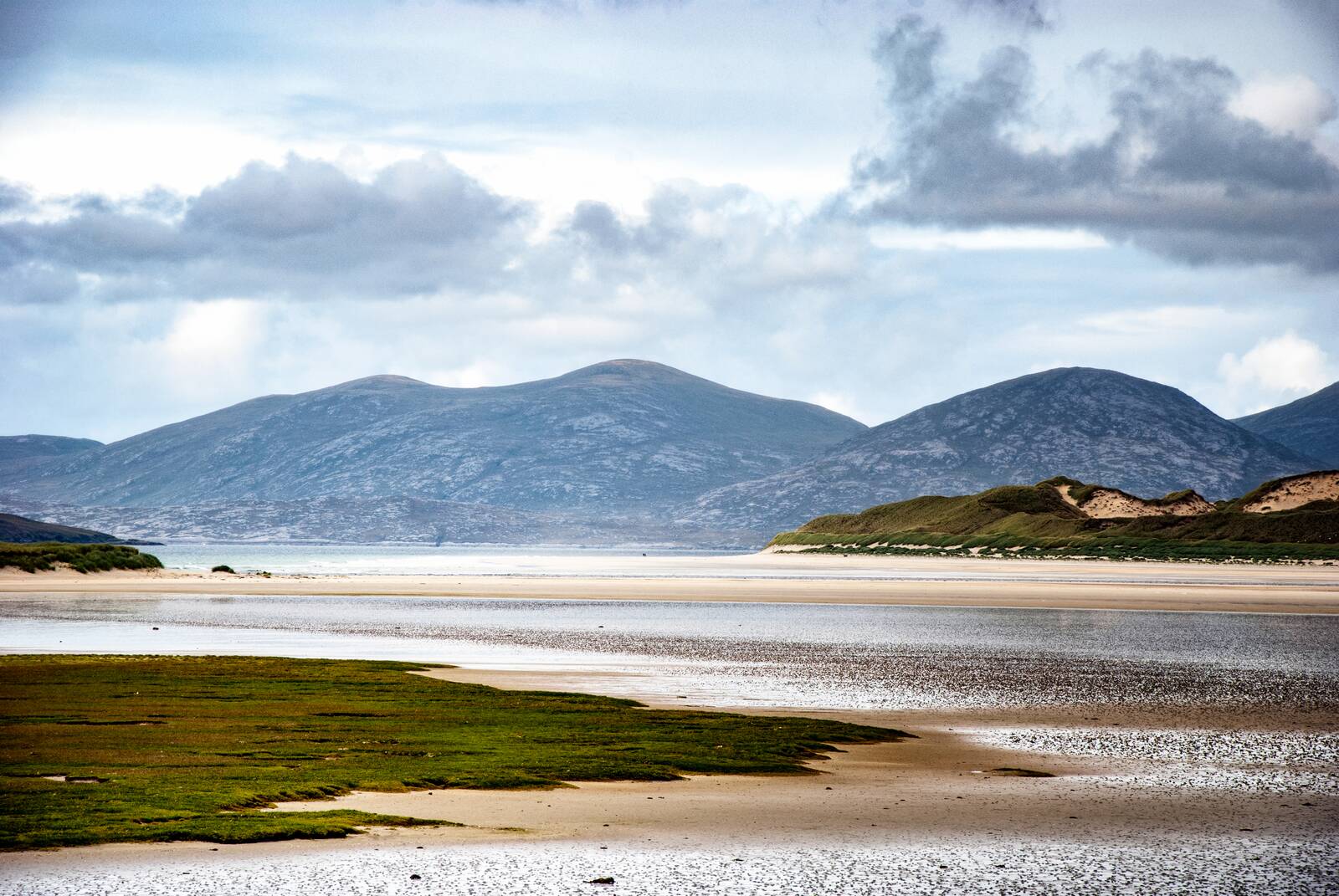
An Turas Mòr · Pàirt IV
Innse Gall
The Outer Isles. Beaches that belong in the tropics, houses that belong to the wind, and stones that were old before the pyramids.
tòisich — begin ↓
The Outer Isles. Beaches that belong in the tropics, houses that belong to the wind, and stones that were old before the pyramids.
The far leg — where the map runs out of mainland.
The crossing
Passage plan, as understood from the observation deck.
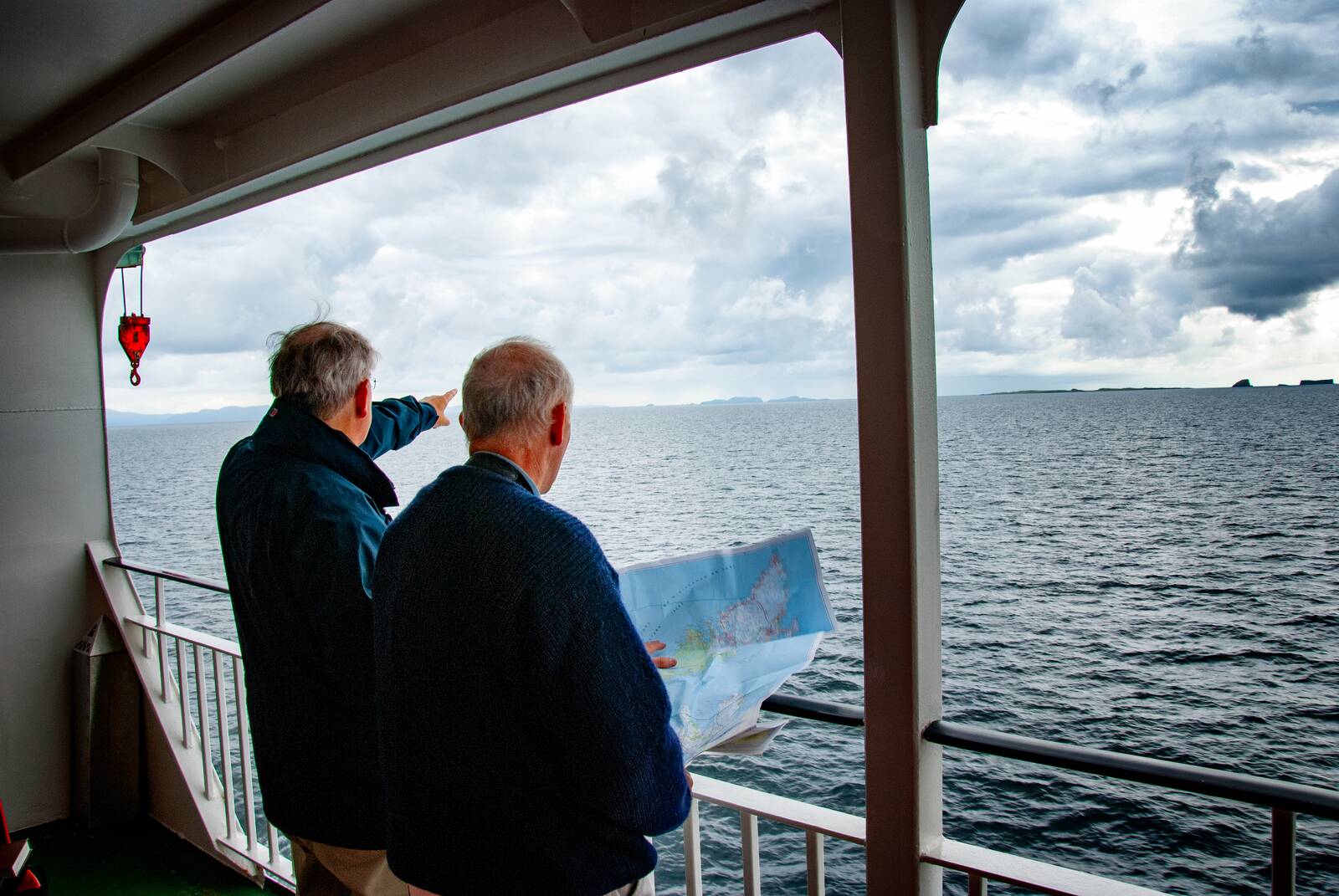
Two men navigating by paper map for the joy of it, the saltire over the bow, and a lighthouse standing in heather.
an cairt-iùil · the chart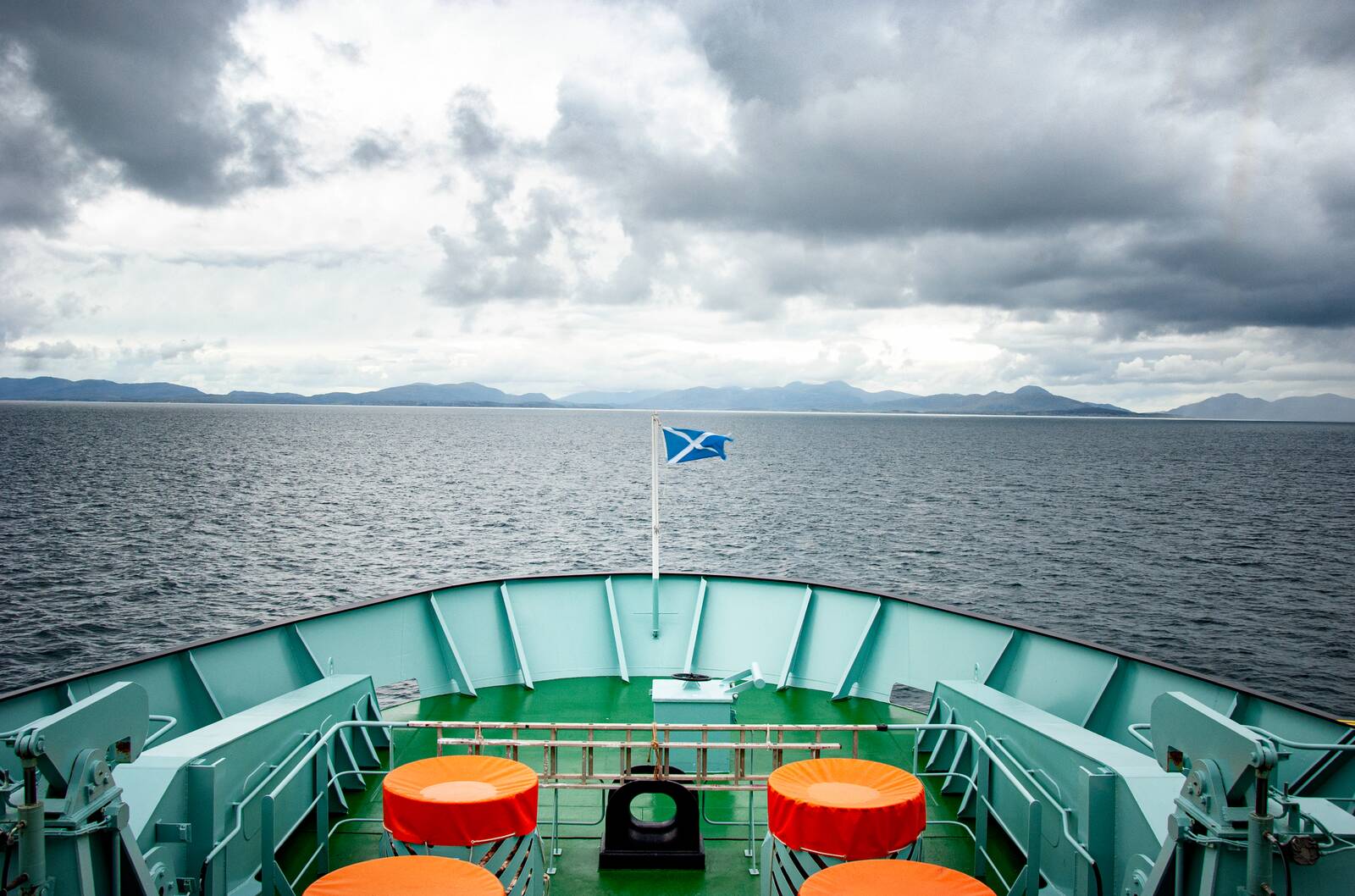 an toiseach · the bow
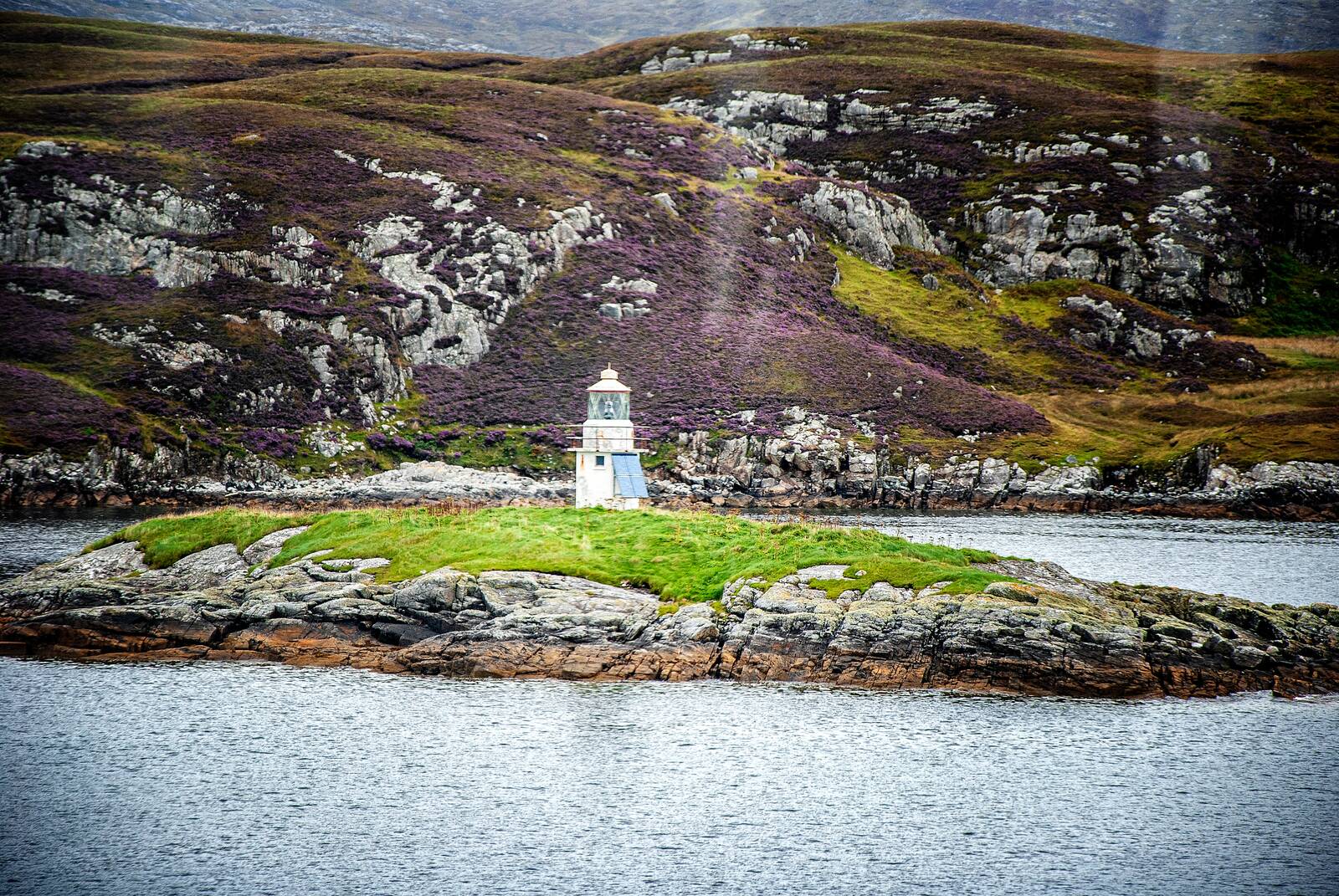 an taigh-solais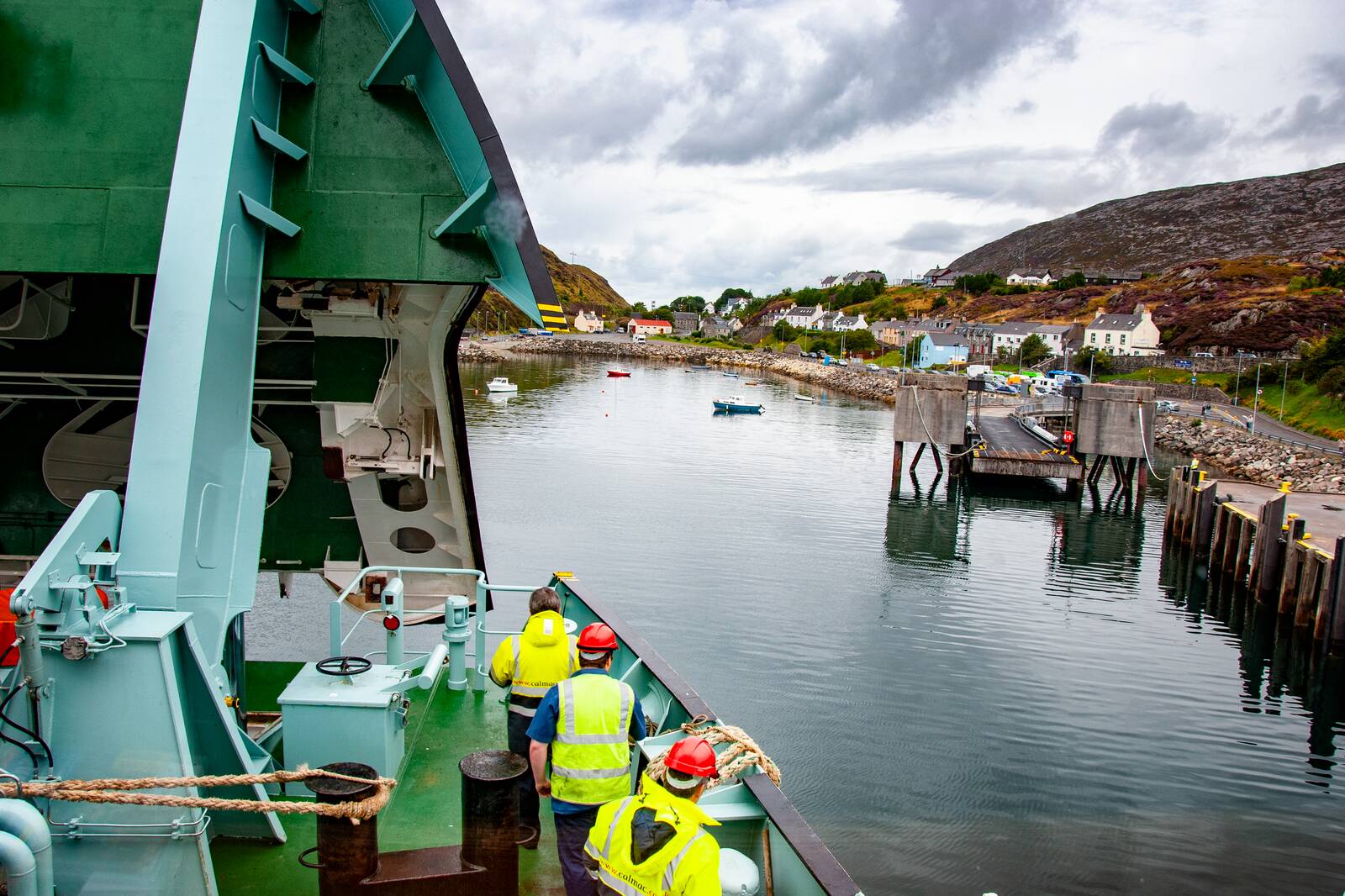
Tarbert comes out to meet the boat —
ropes first, questions later.
The impossible sands
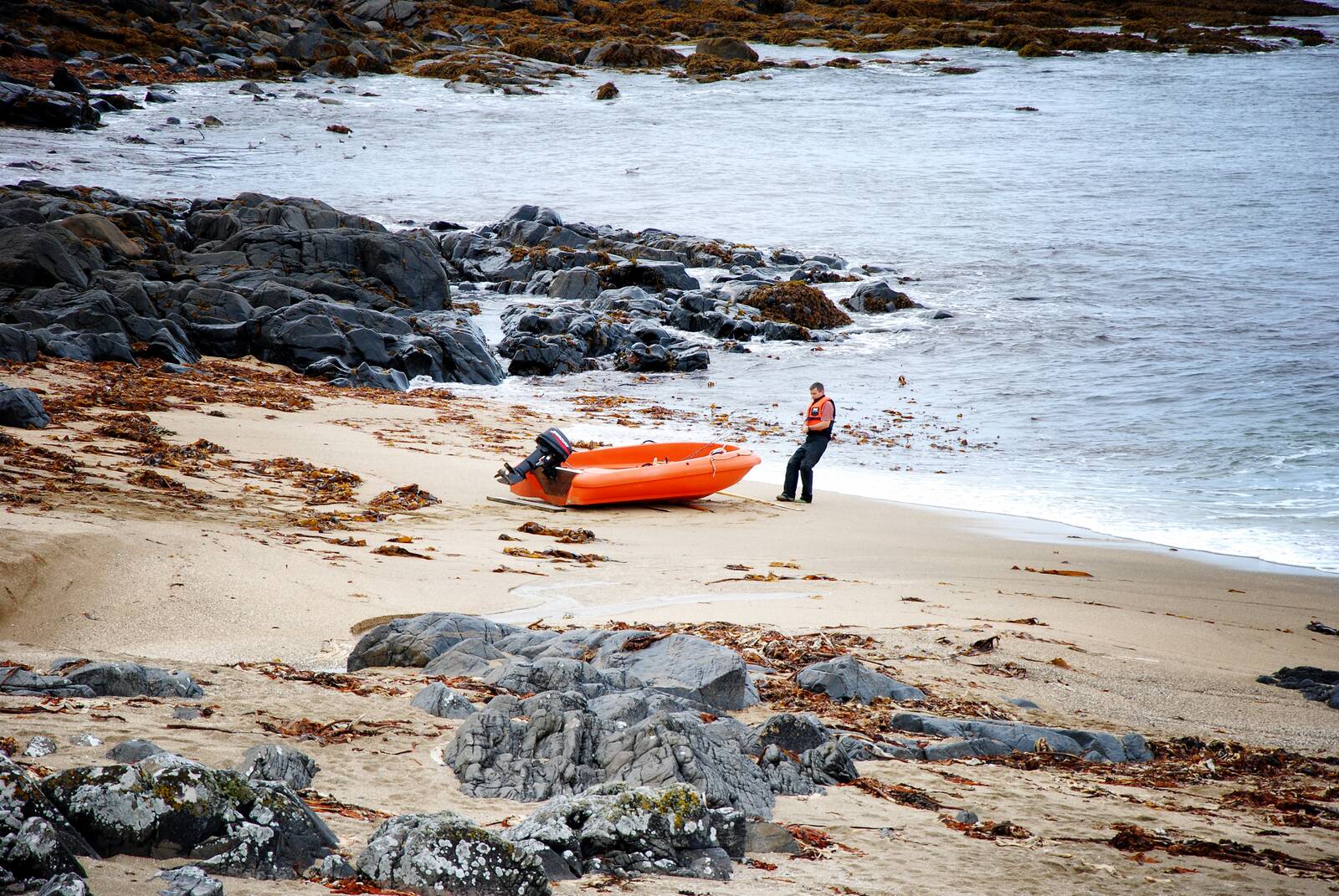
One orange dinghy
to punctuate five miles of silver.
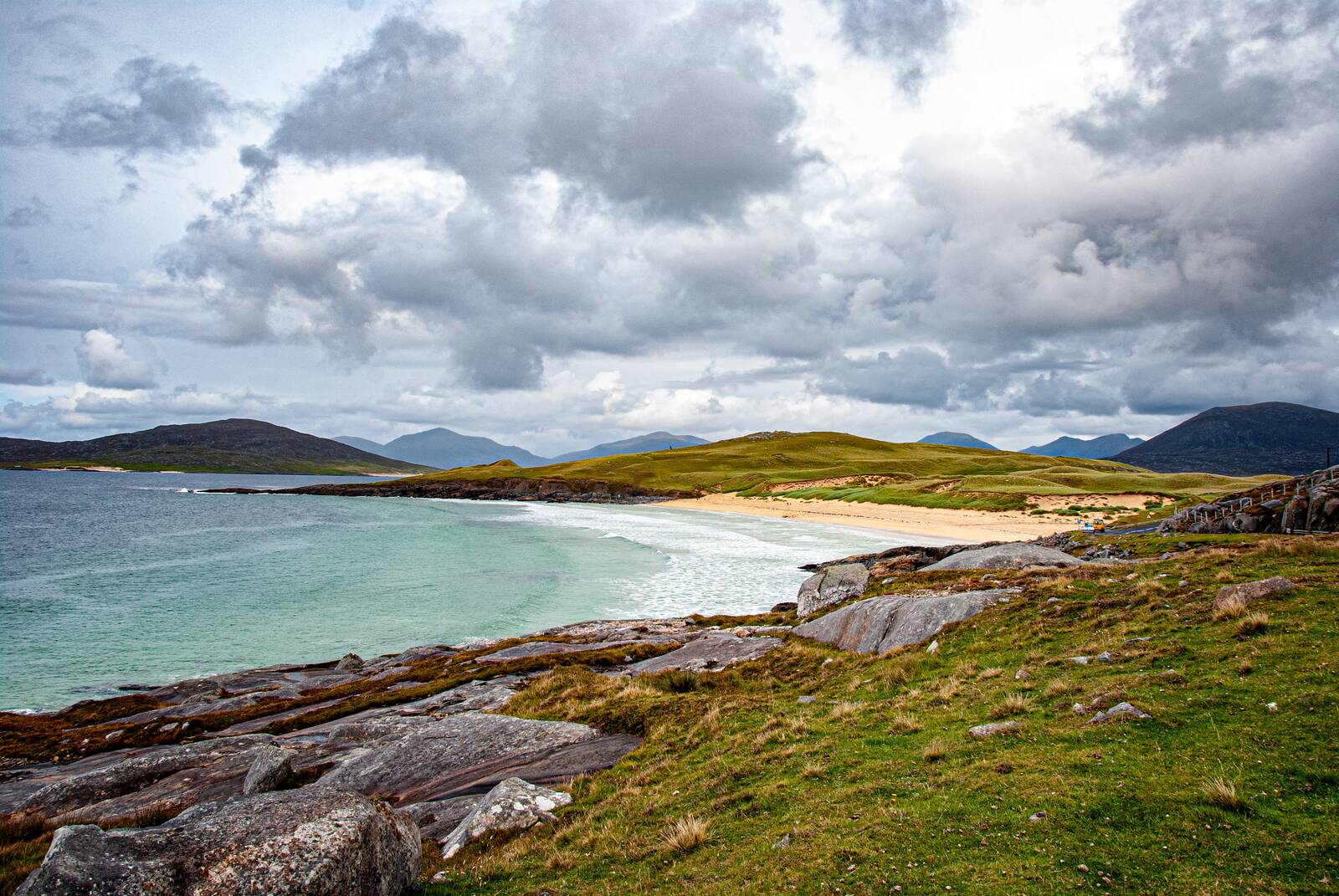
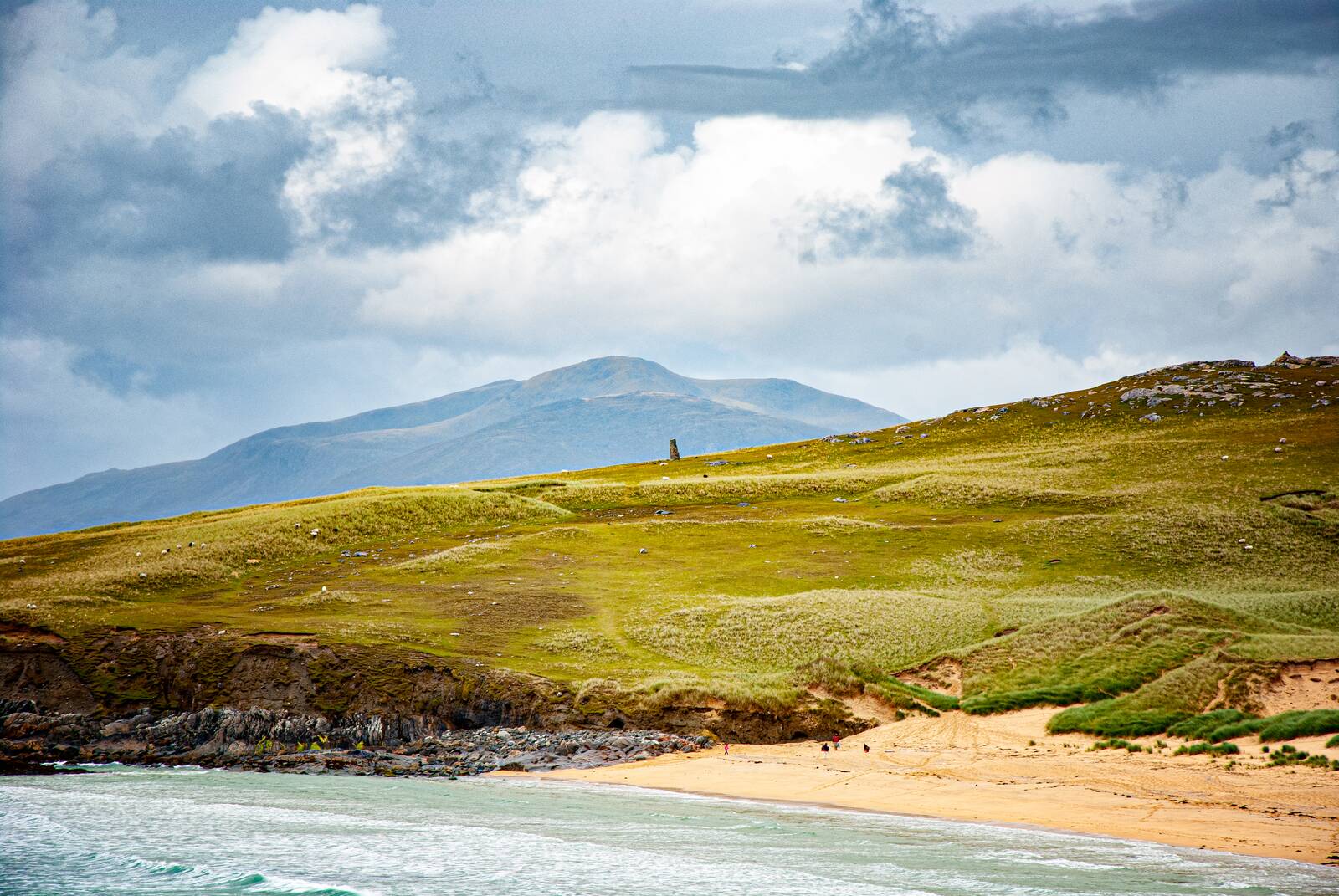
Field plate: the grass doing the structural engineering under all that scenery.
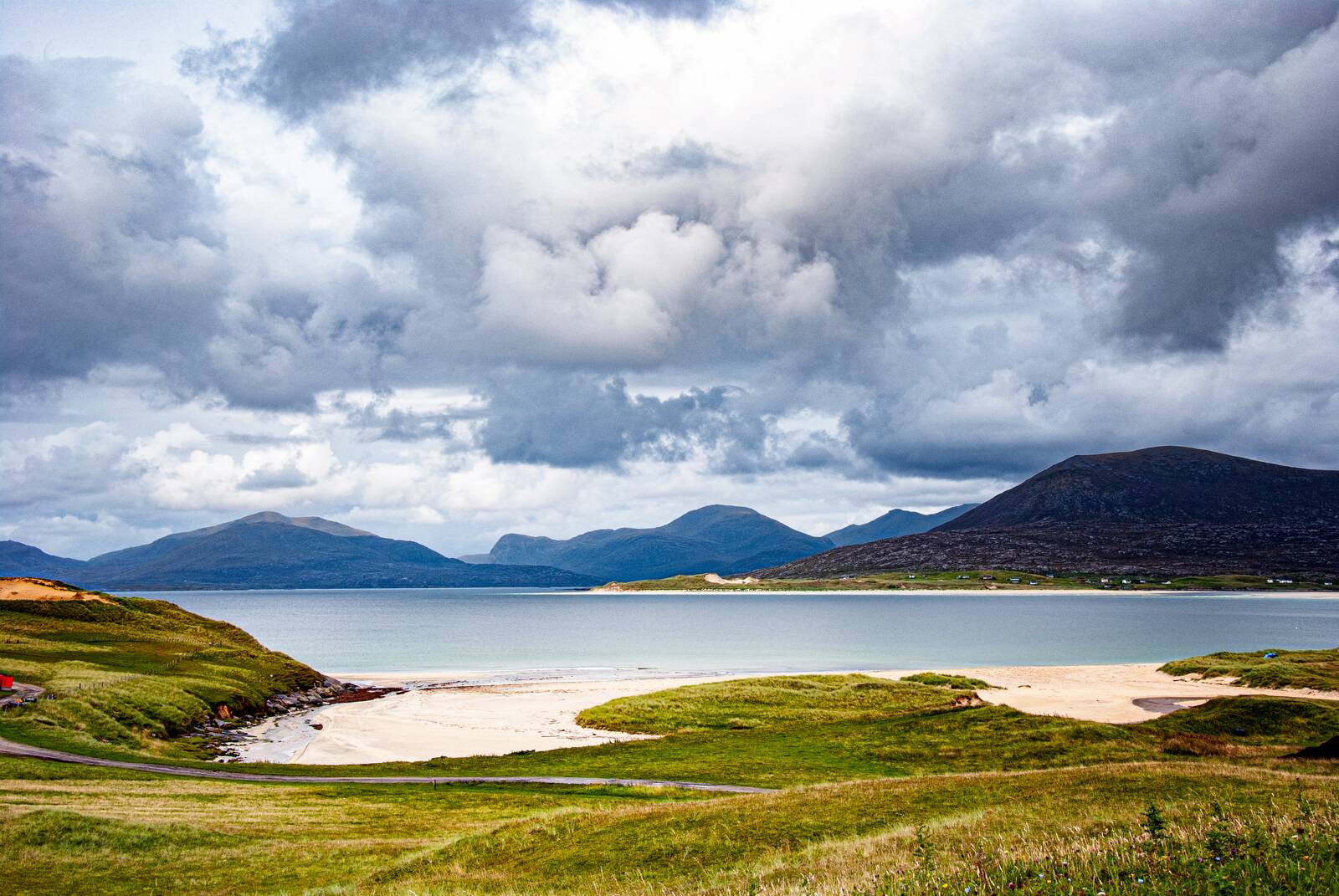
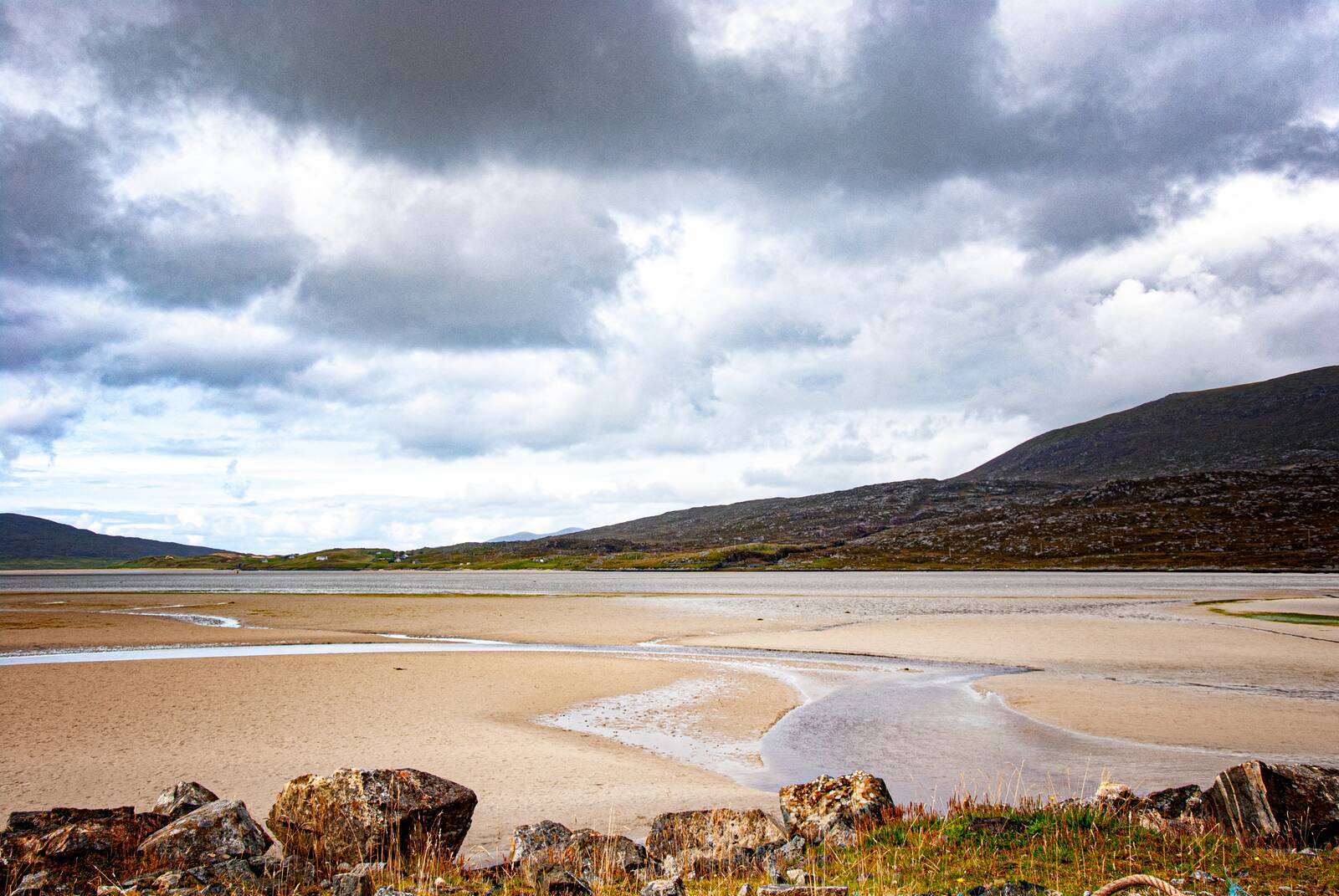
SeilebostThe tide going out across a mile of white shell-sand — the beach rewrites itself twice a day and never repeats.
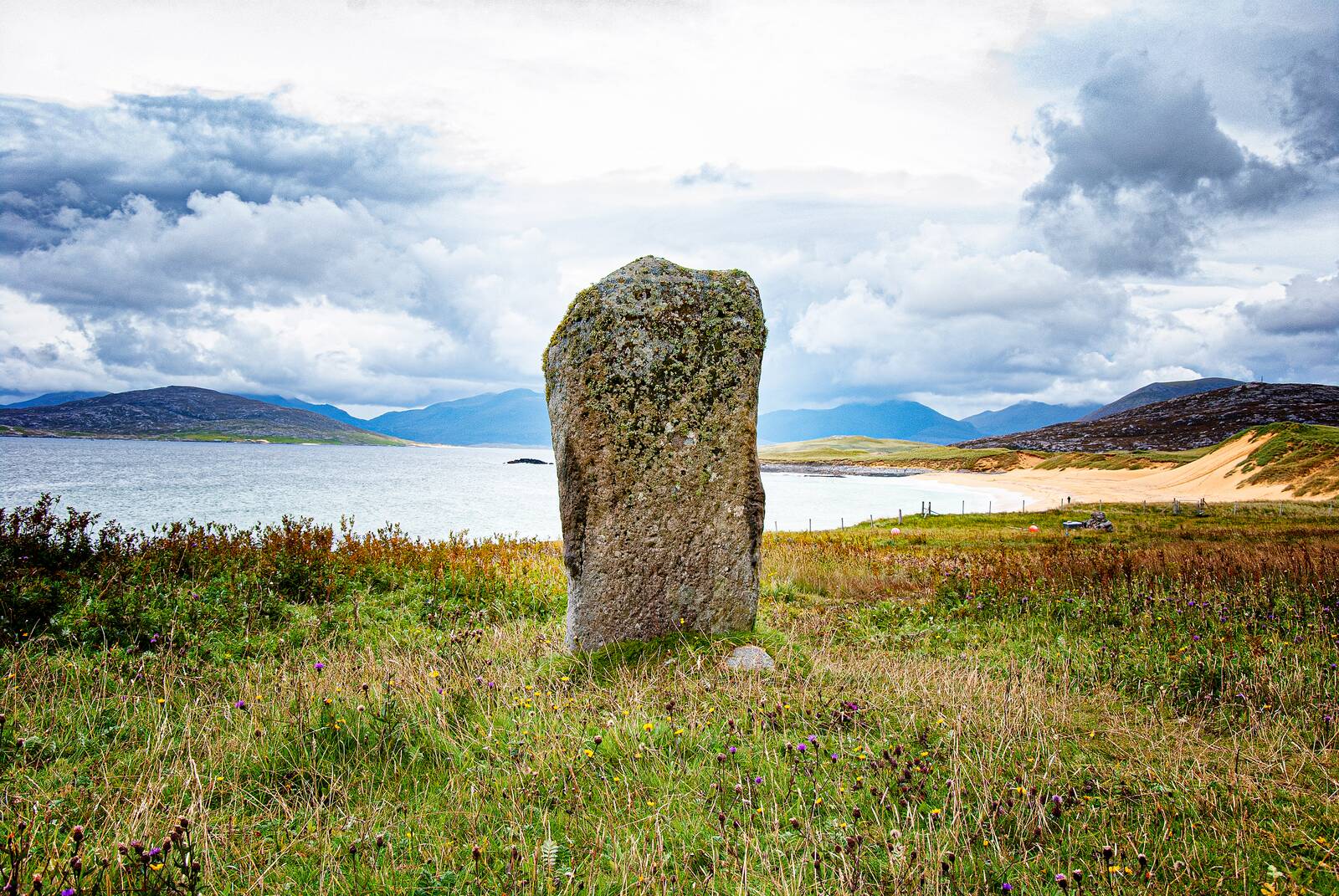
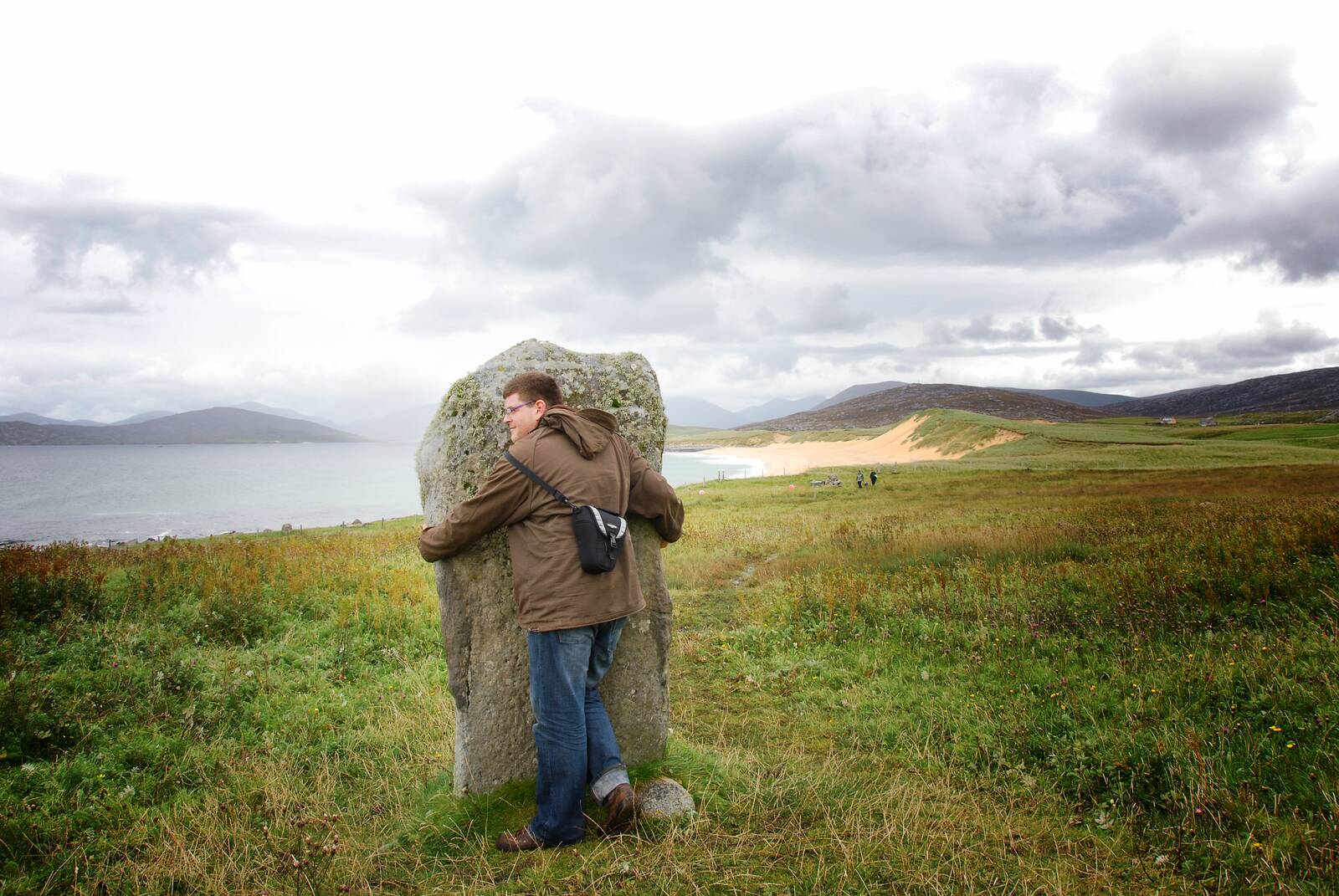
An gaolReader, I hugged a standing stone. Four millennia of stored warmth, or possibly just wind-shelter. No regrets.
The carved tomb at the edge
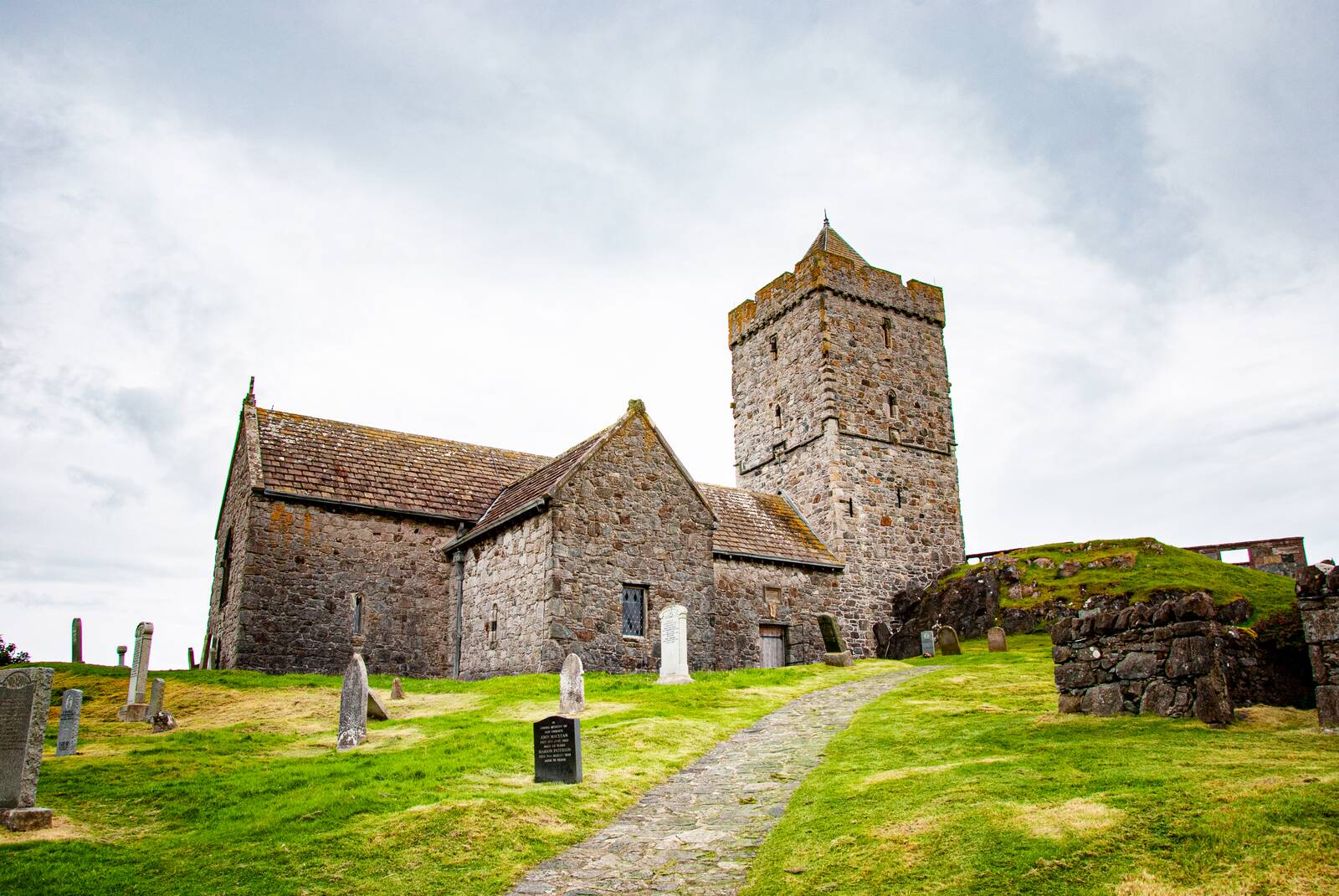
Tur ChliamainnBuilt by Alasdair Crotach — 'Hunchbacked Alexander' — 8th chief of the MacLeods, who had his own tomb carved twenty years before he needed it. Planning ahead, clan-style.
Inside: an armoured effigy asleep in the wall, and five centuries of MacLeods filed under stone.
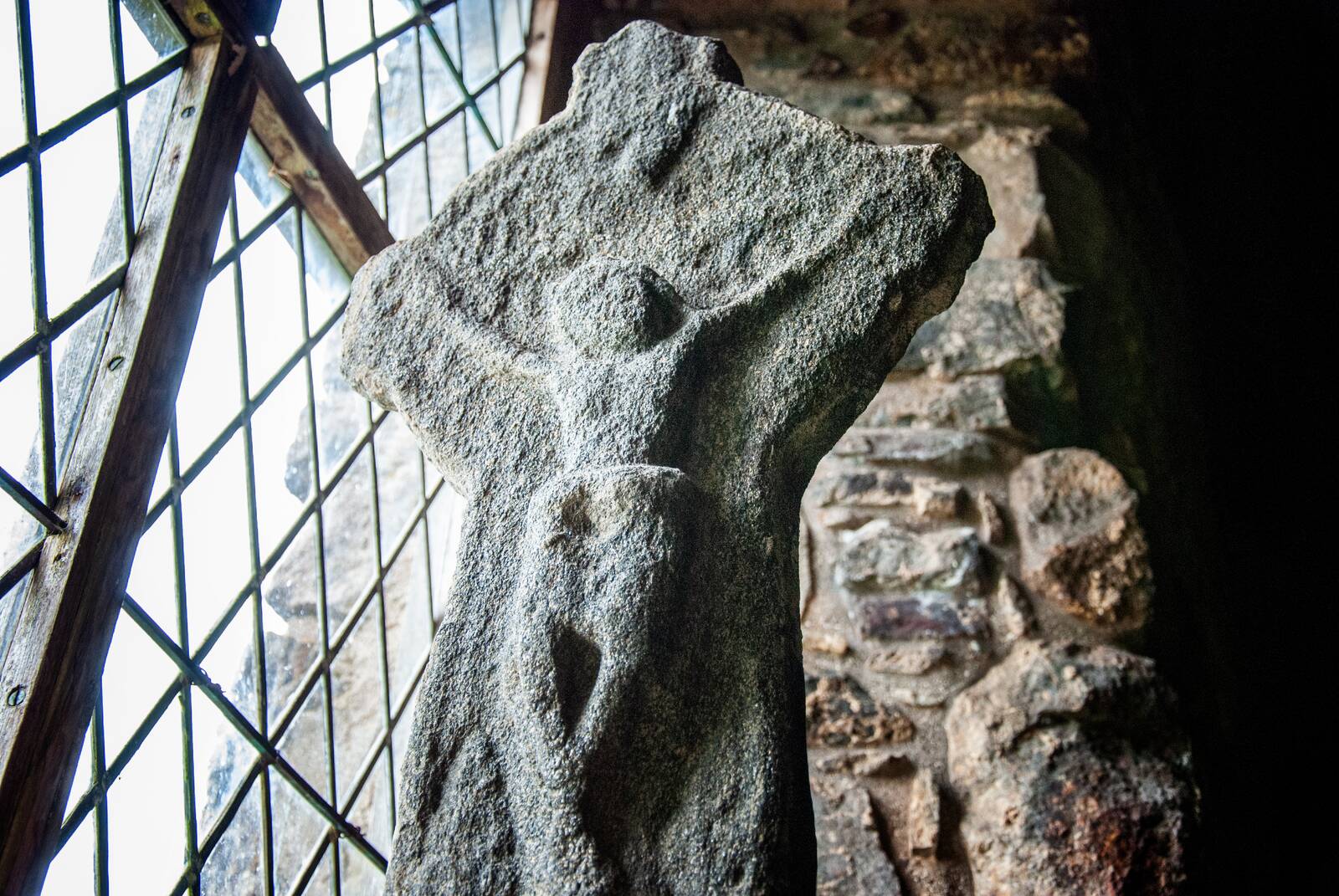 an ceusadh · crucifixion
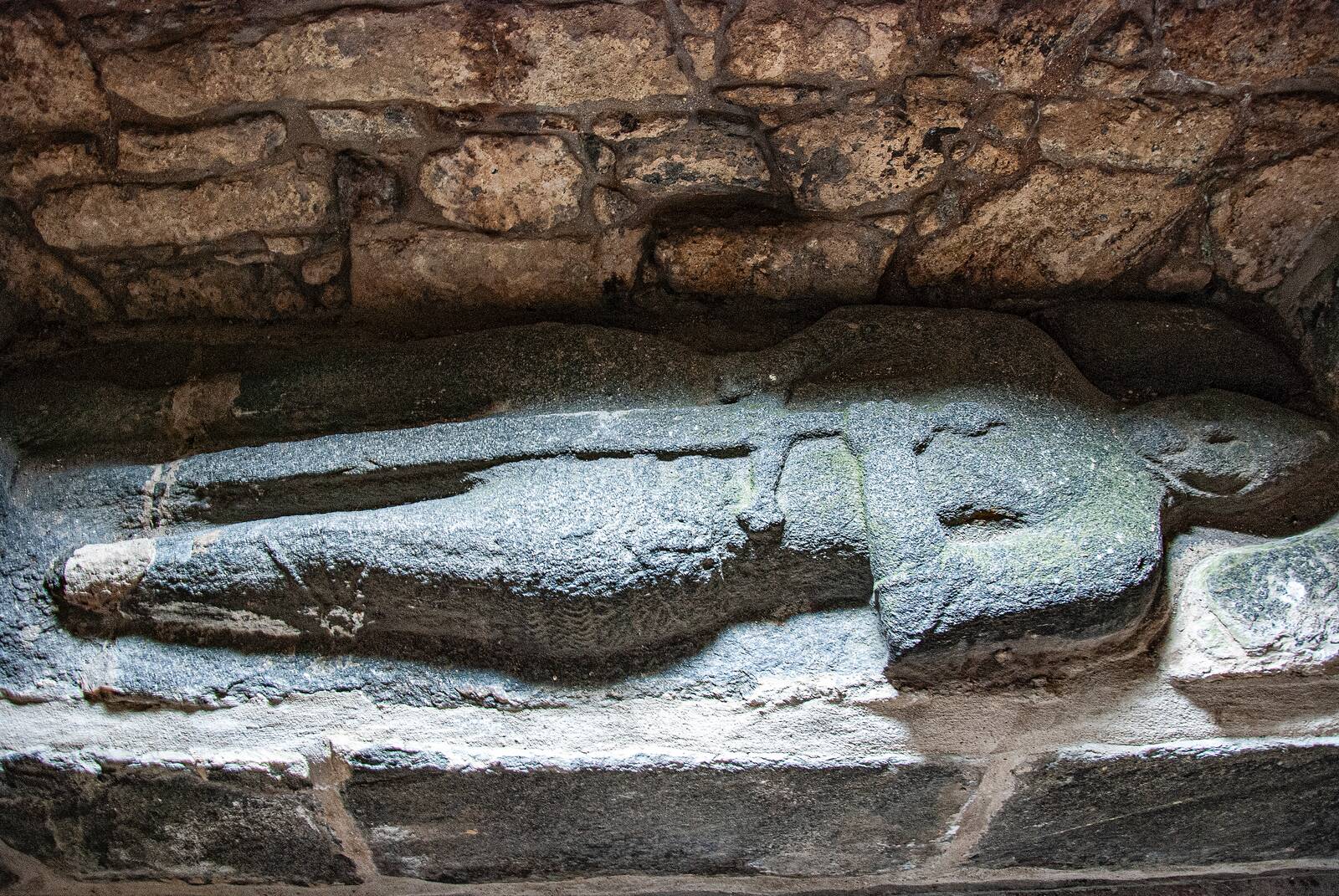 an ìomhaigh · the effigy
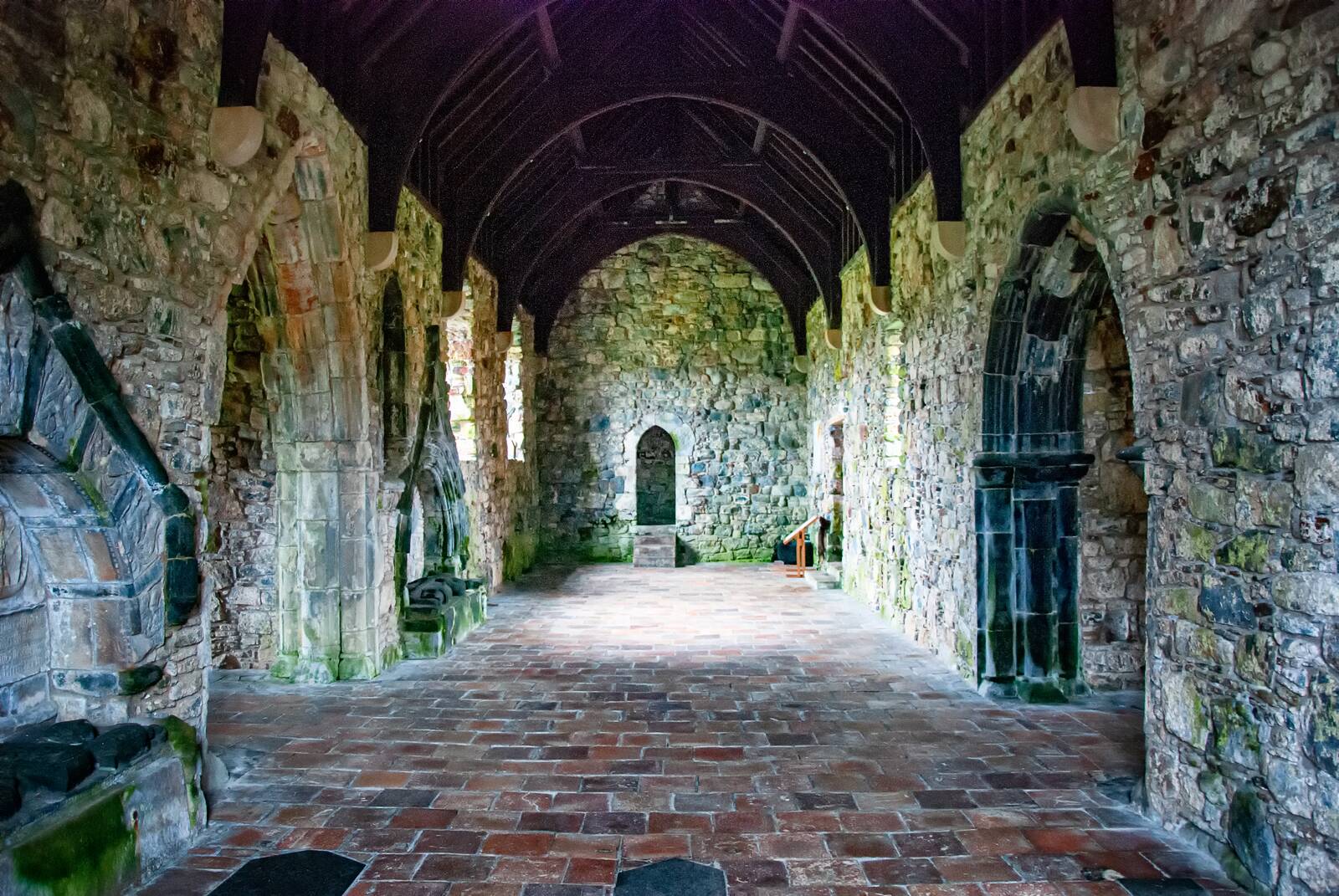 an corp-eaglais · the nave
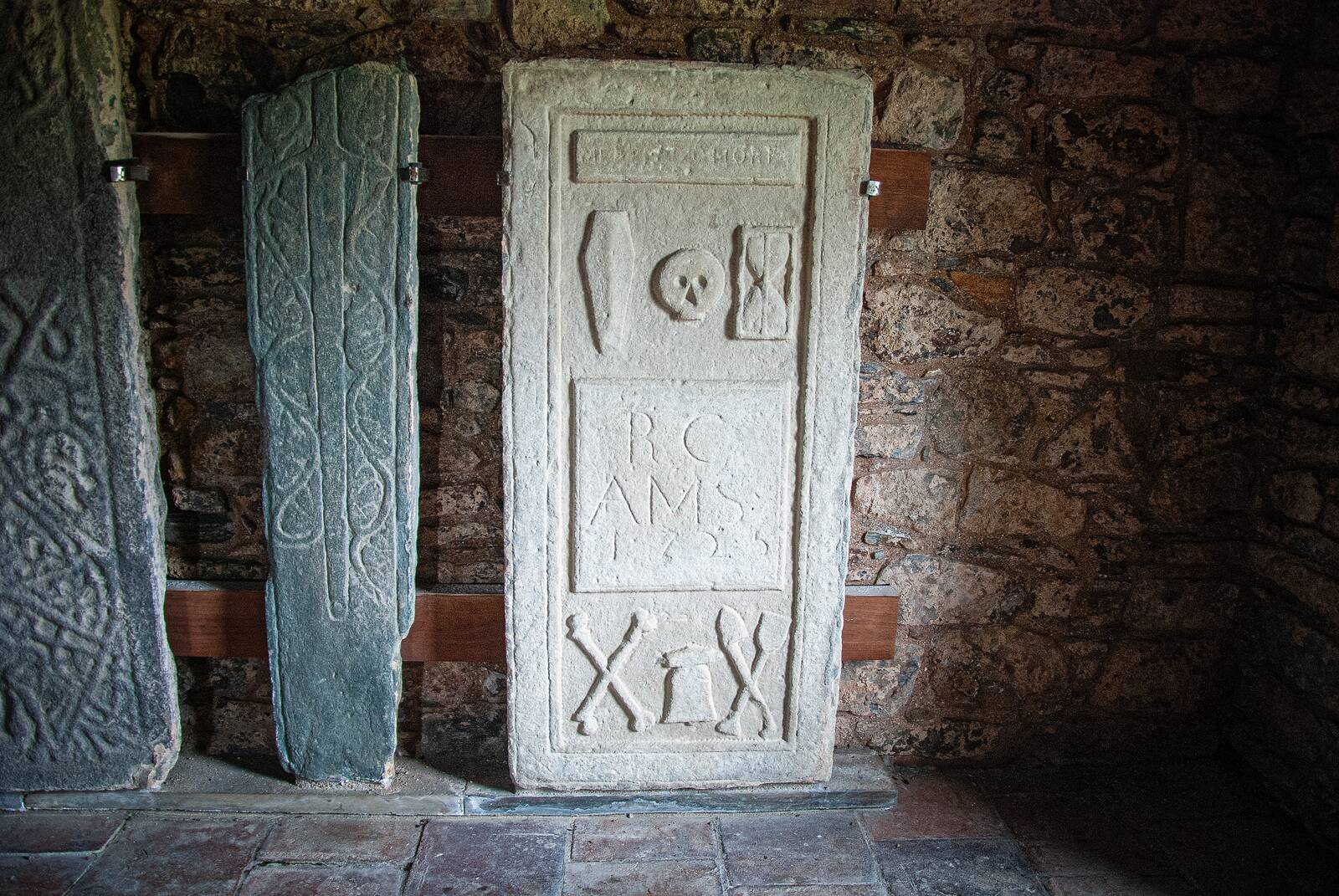 leacan · grave slabs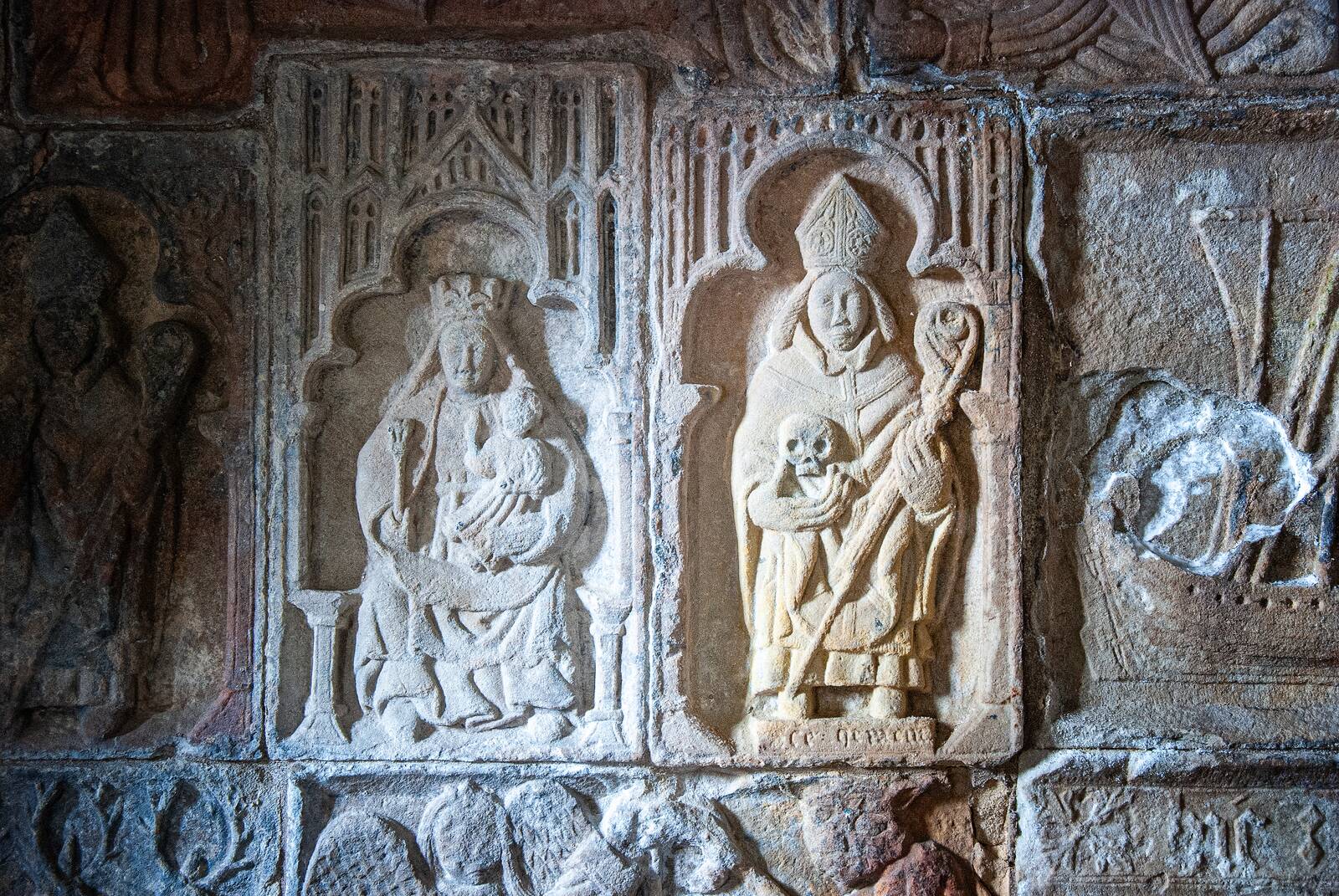
The tomb arch, panel by panel: apostles queueing under a canopy of angels.
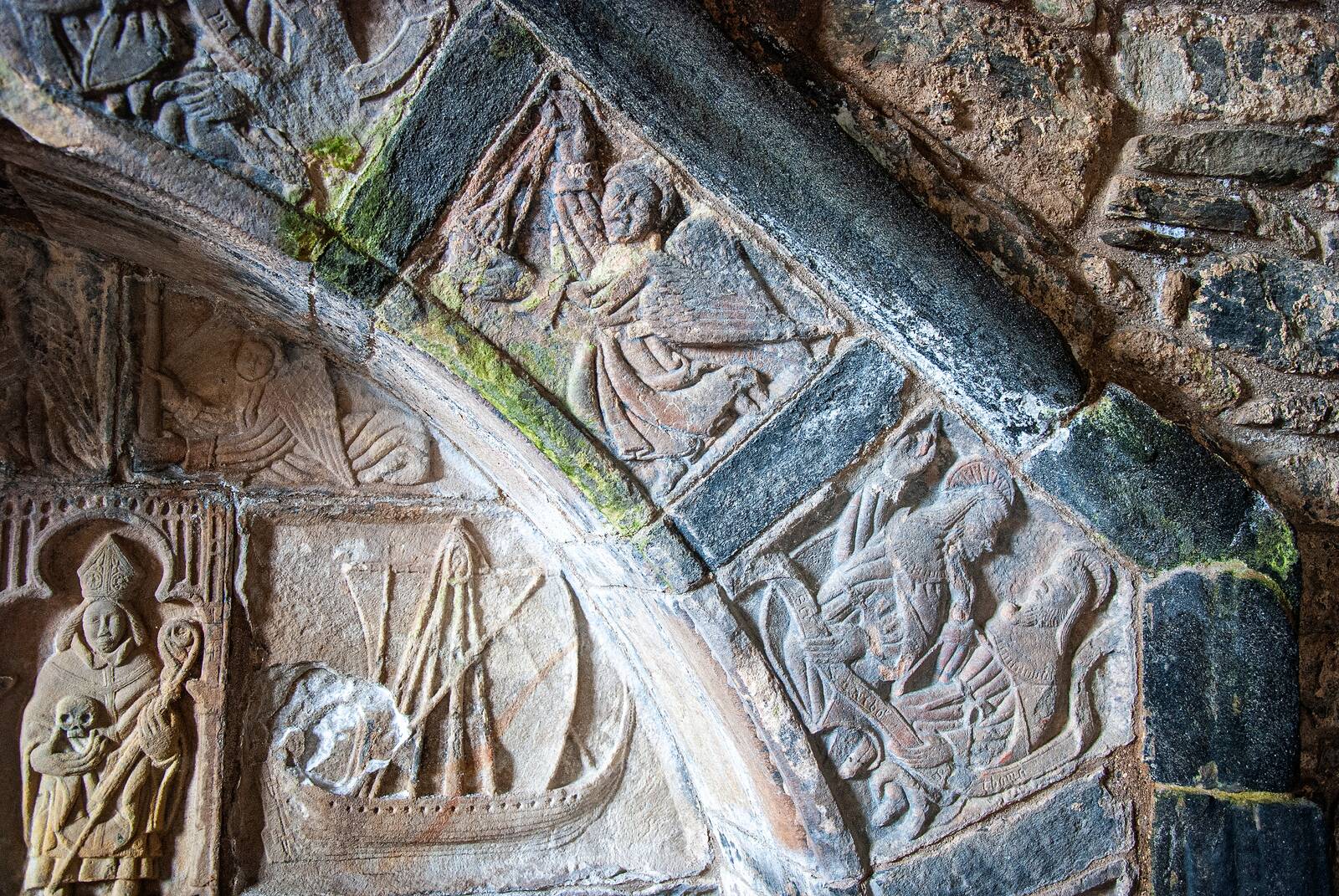
A galley under sail — the birlinn that carried the clan's power up and down these seas.
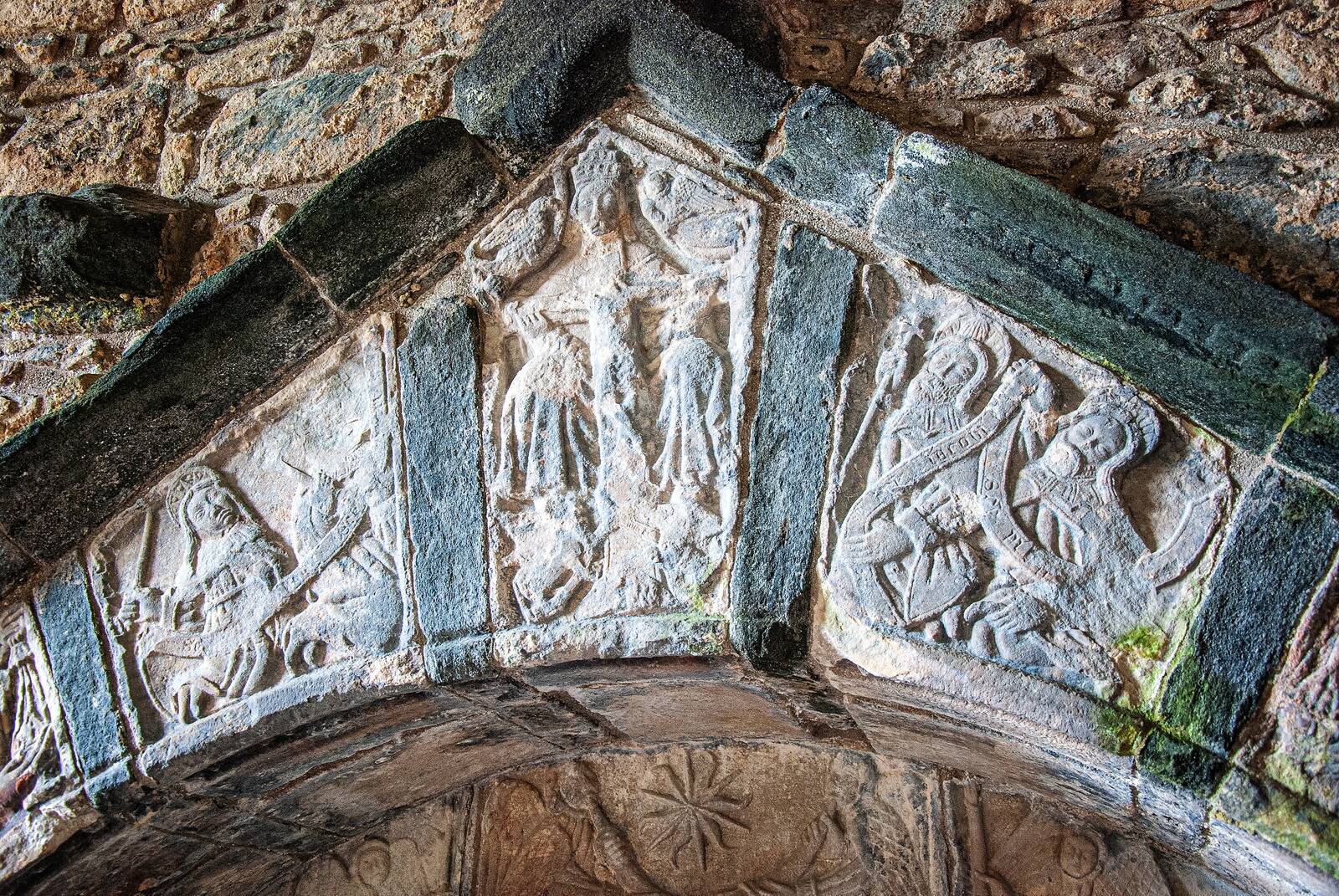
Saint and censer, bishop and crook — the full medieval cast, in Lewisian gneiss.
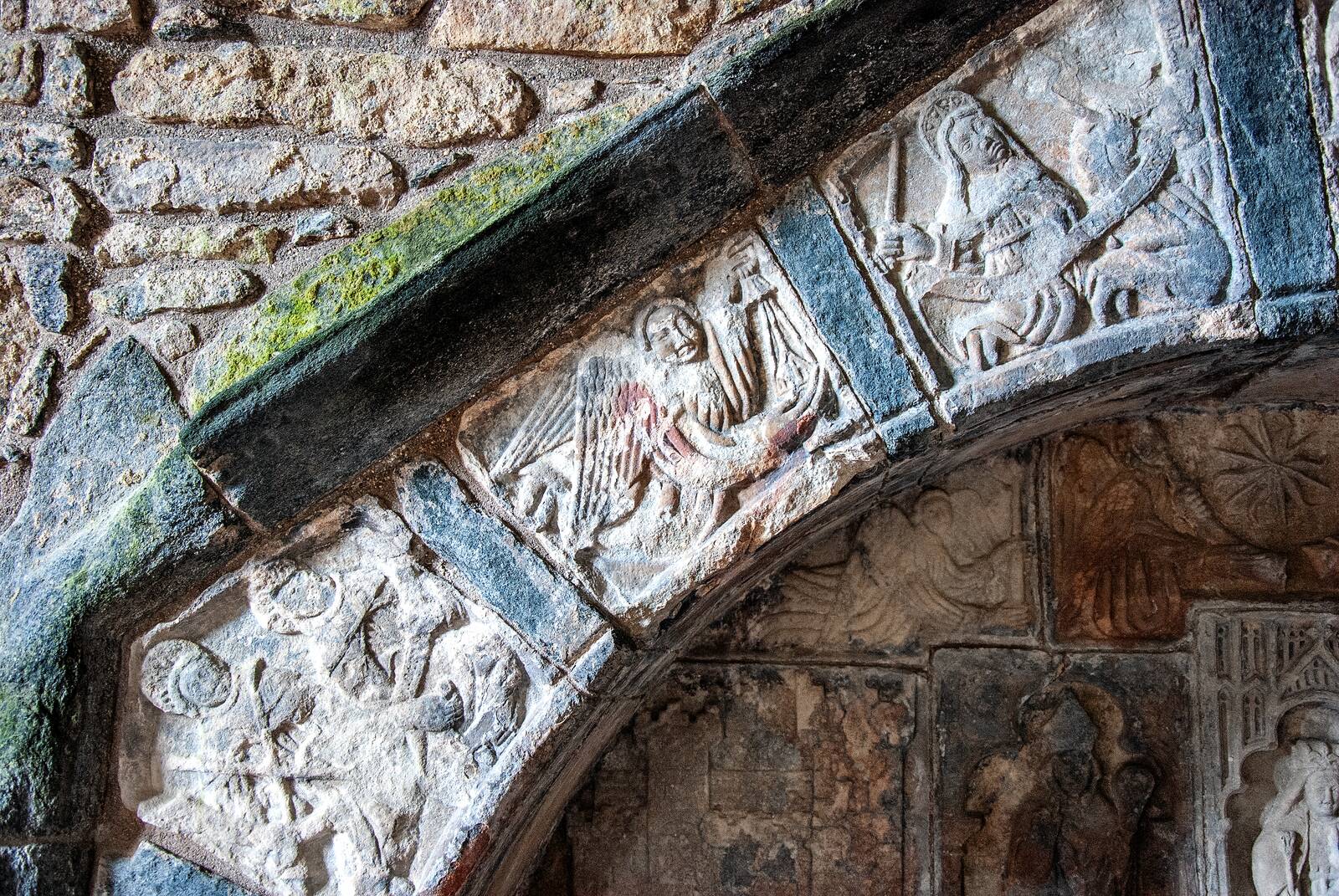
And a hunting scene at the edge: deer, hounds, and the chief who paid for it all.
The blackhouses
Section through a house that heats itself with its own roof — the smoke was the insulation, the disinfectant and the next year's fertiliser.
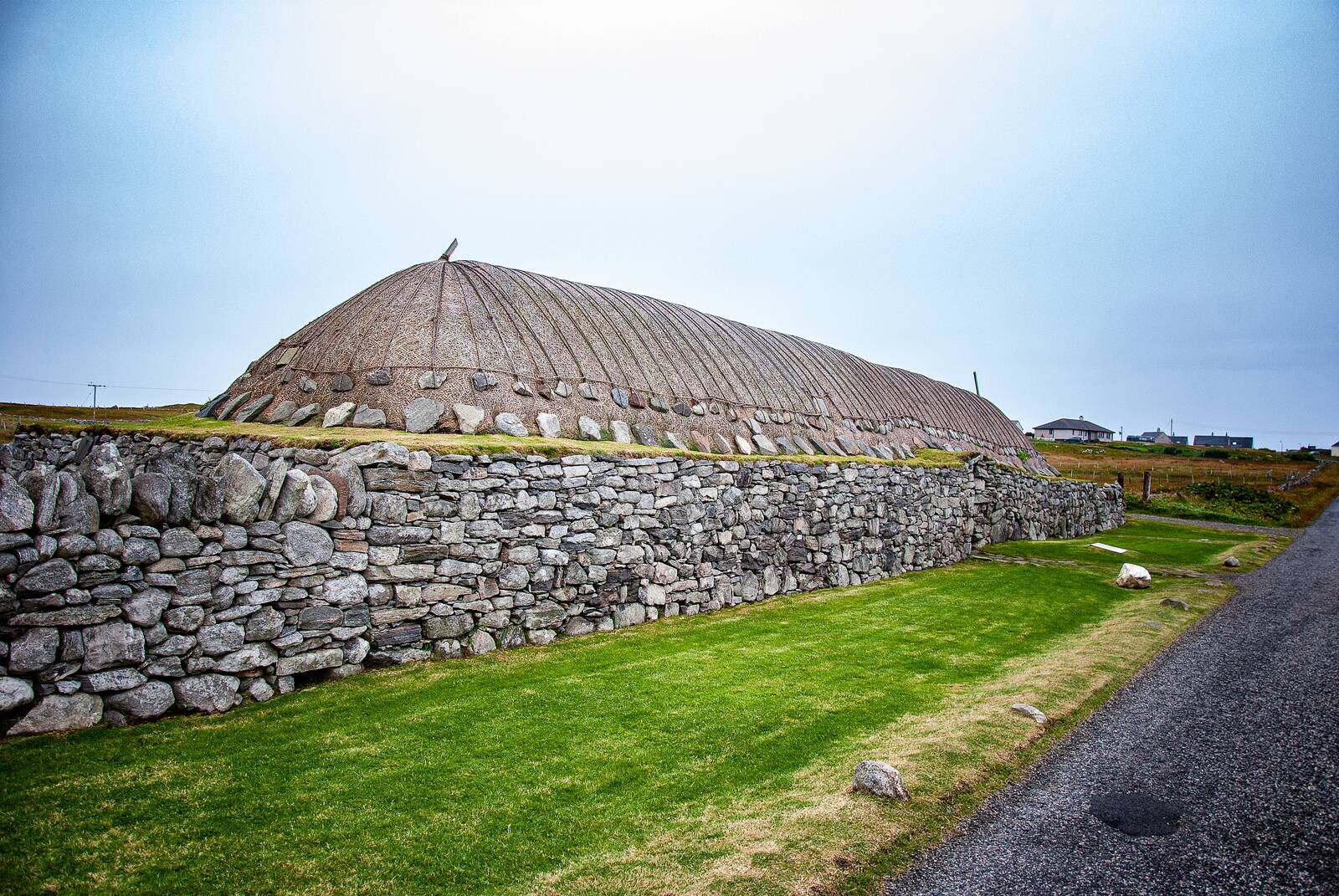
Taigh dubh ÀrnoilNo chimney, no gable, no nonsense — the house lies down into the wind like everything else that survives here.
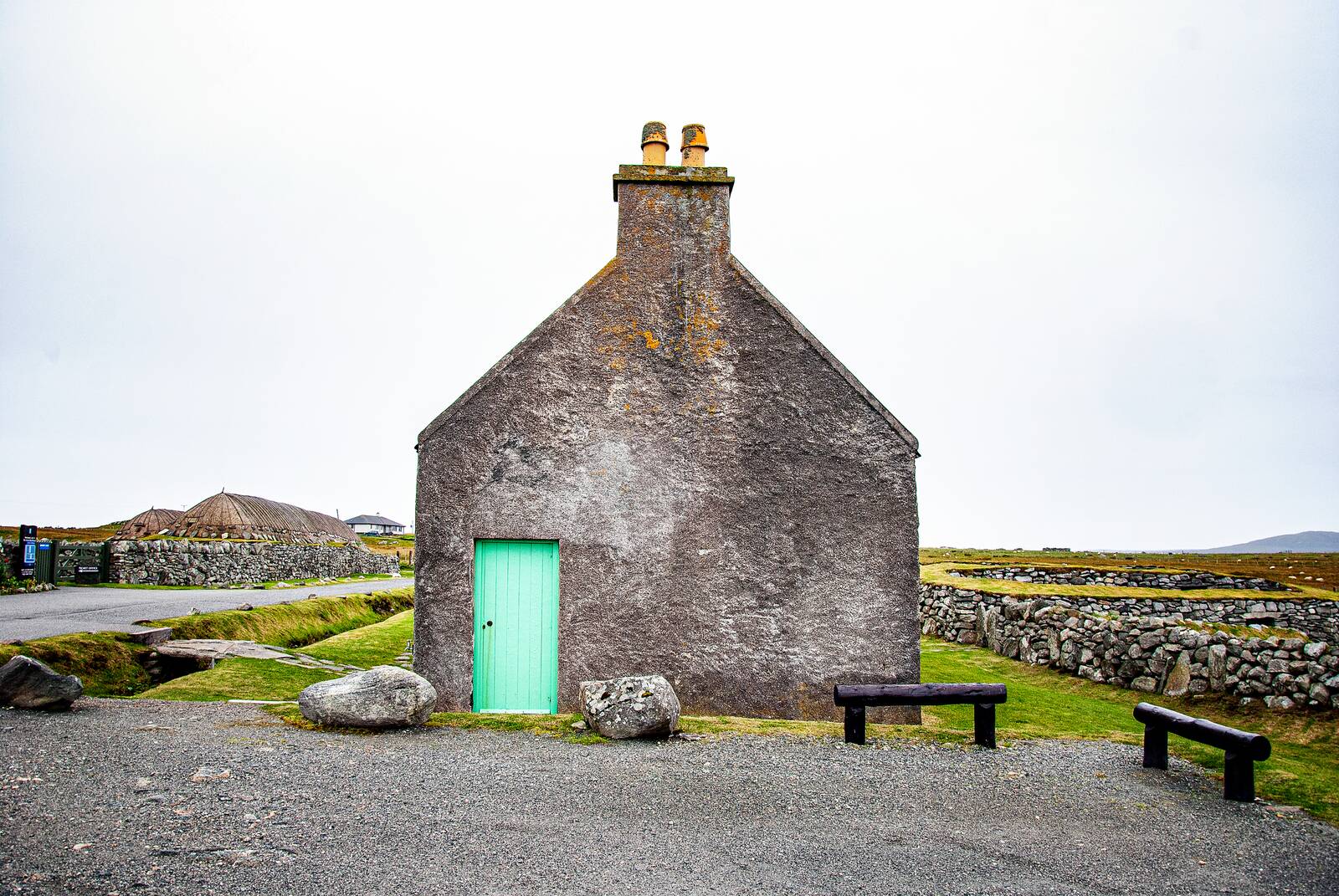
Croft architecture: one peach door, one flooded lane, stone circles that were sheep fanks, gables that gave up on straight lines.
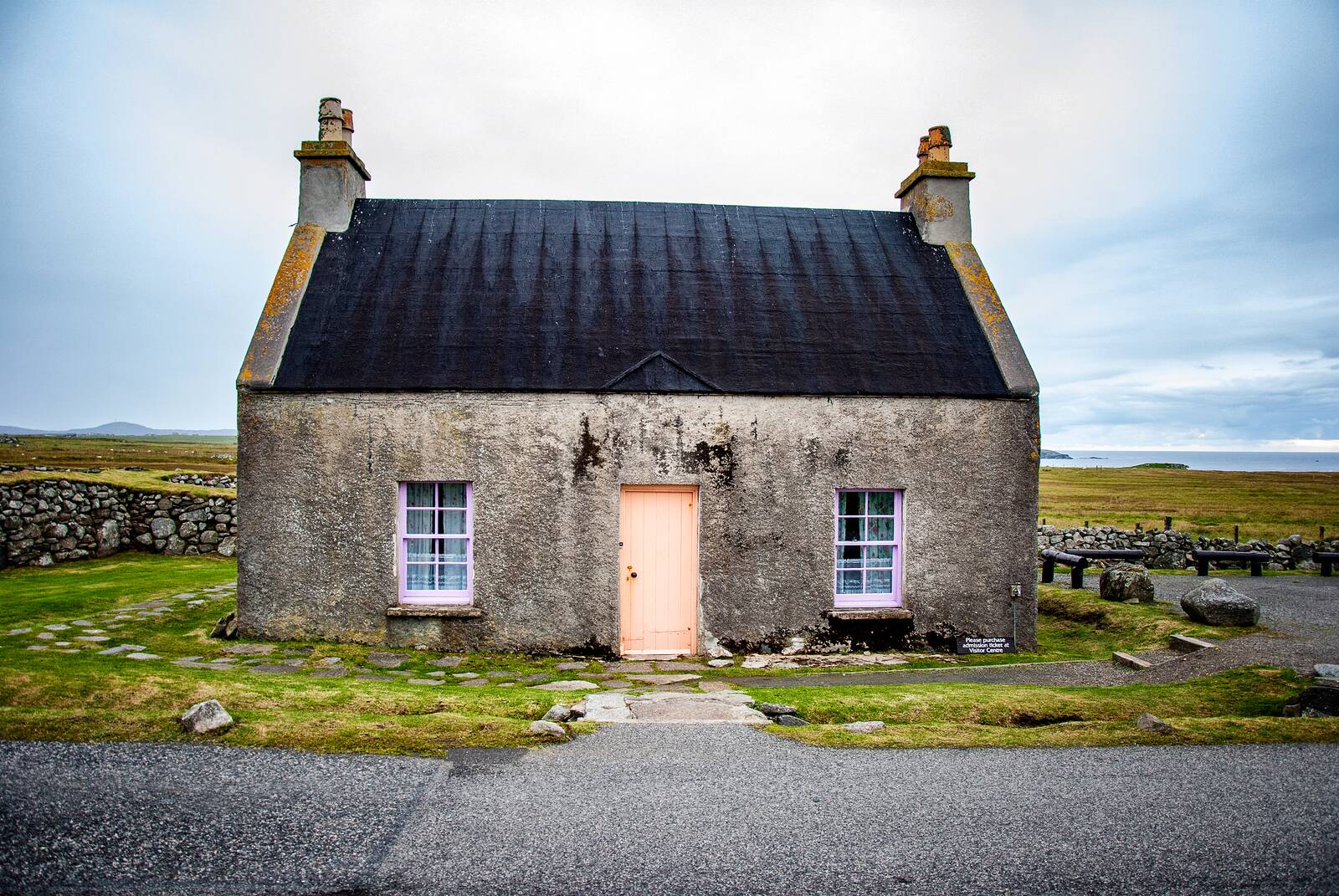 doras pinc
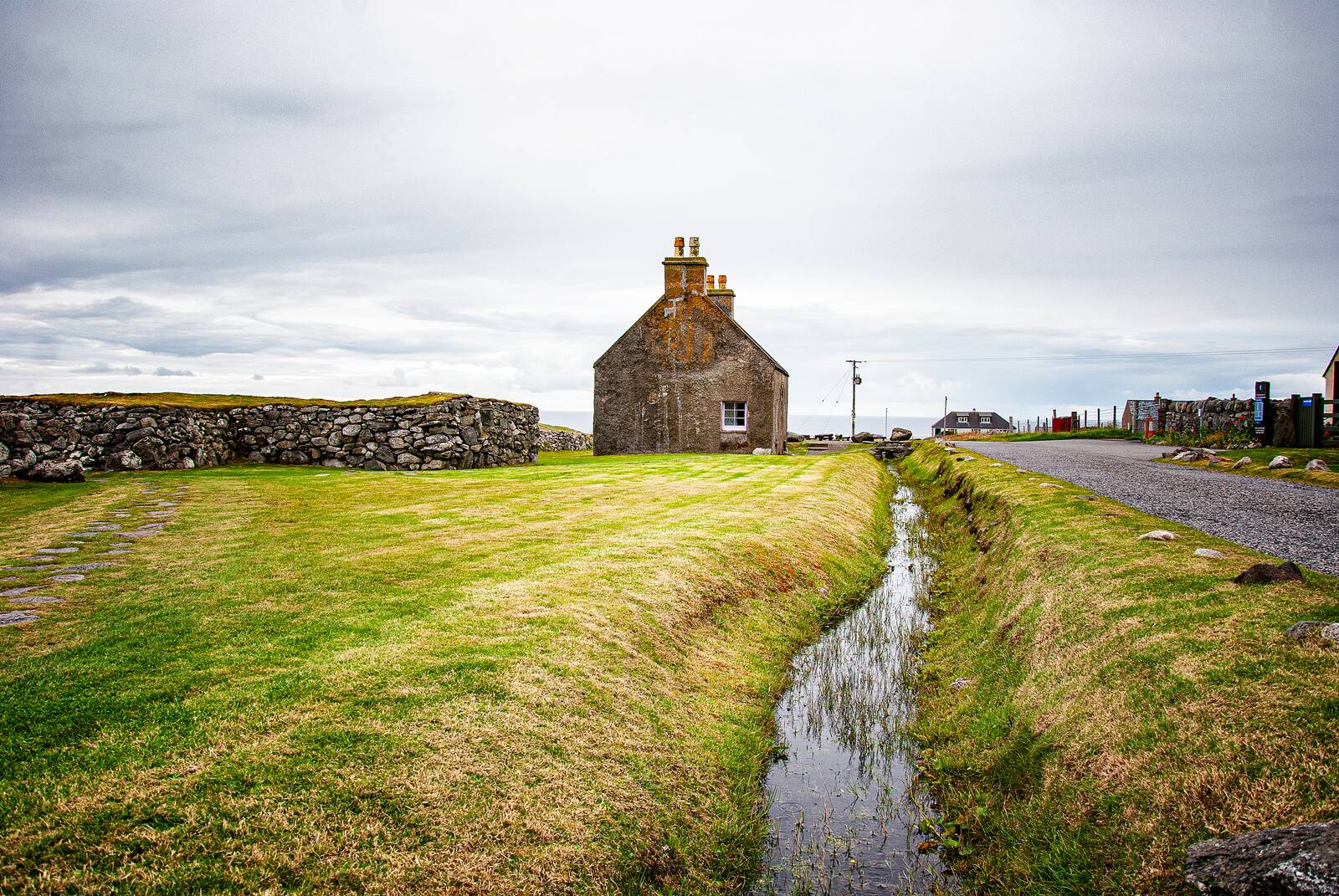 an clais · the drain
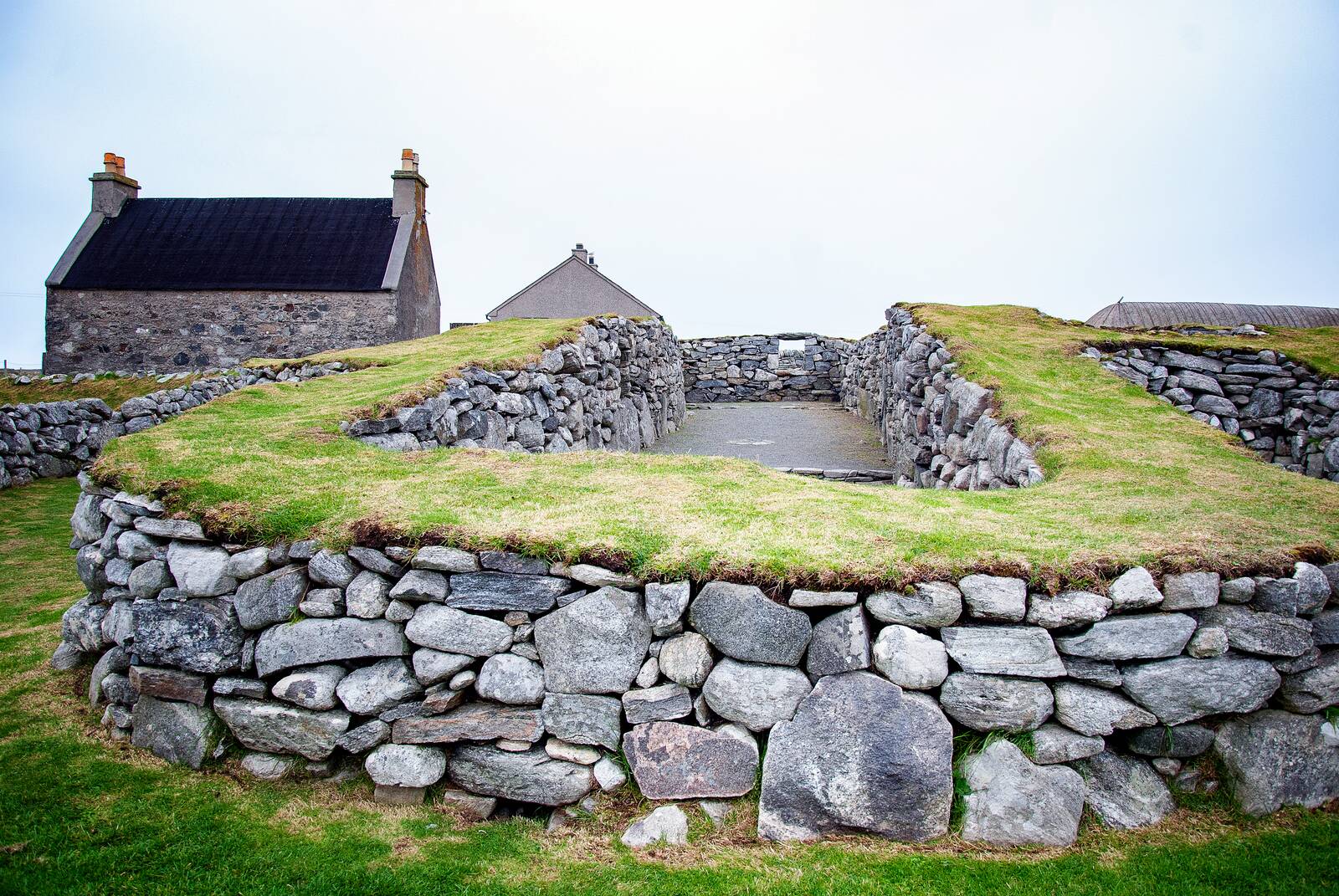 an gàrradh cloiche
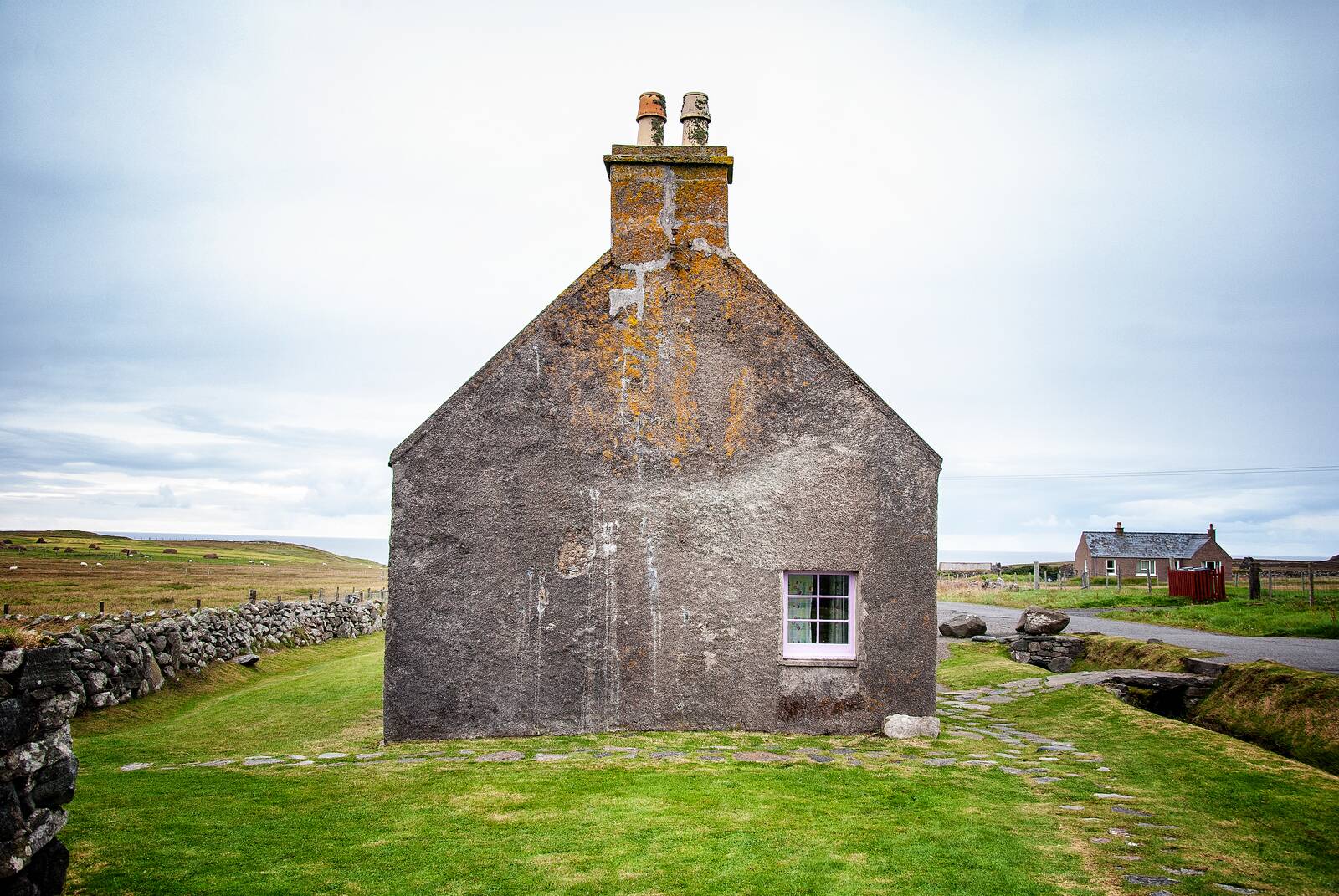 an t-sean taigh
And the abandonments — every township keeps a few, the way a family keeps photographs.
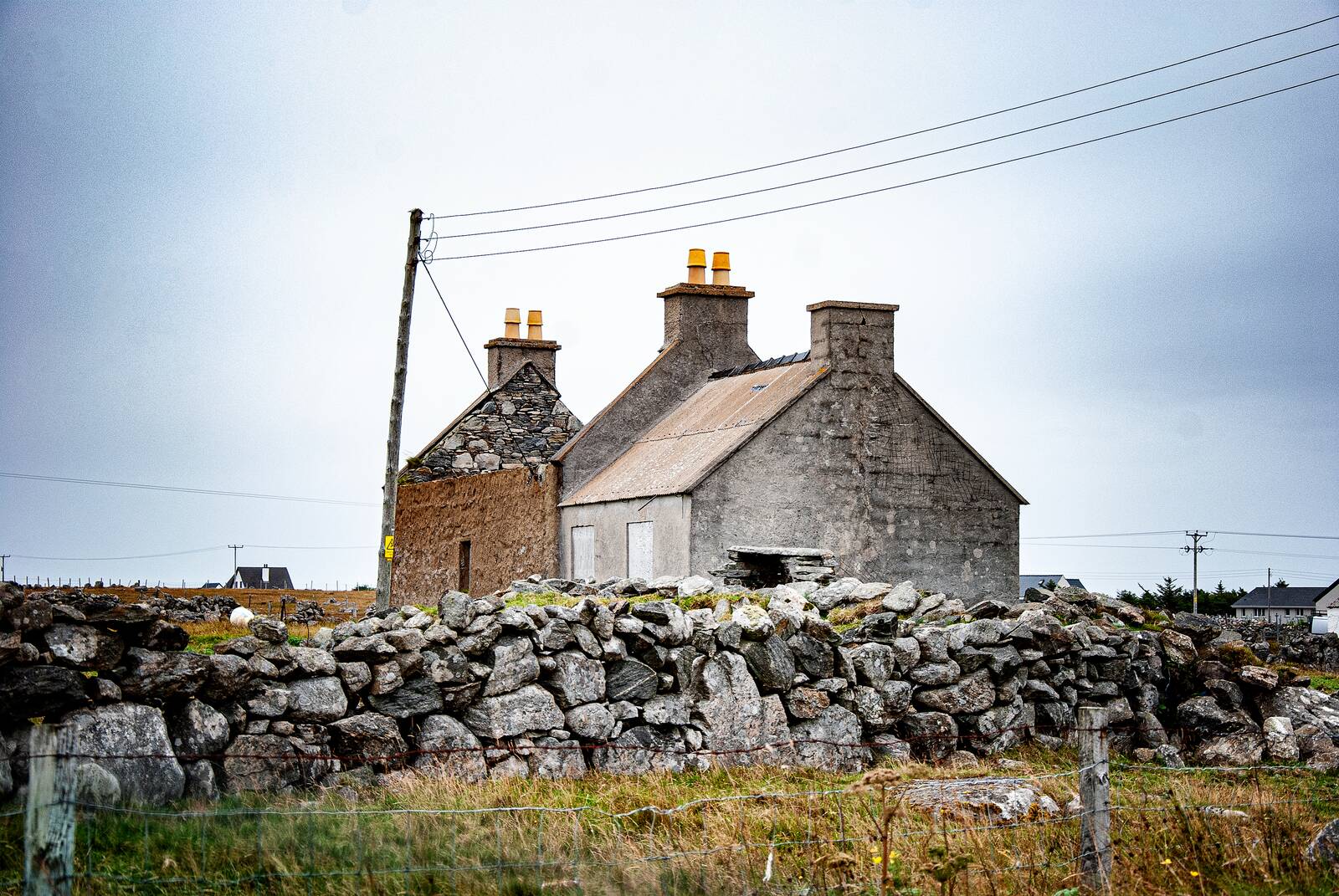 ballachan · walls
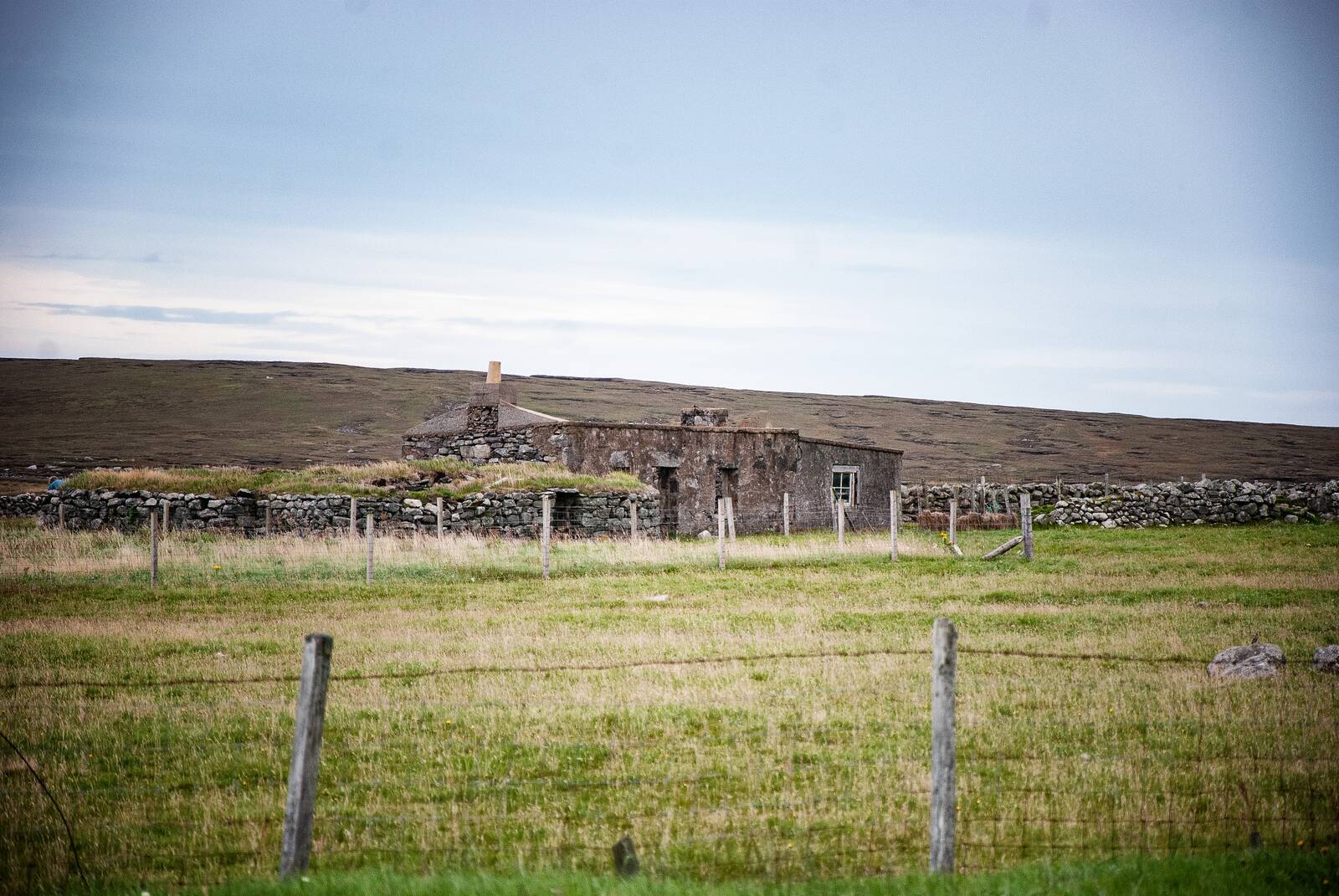 an tobhta · the ruin
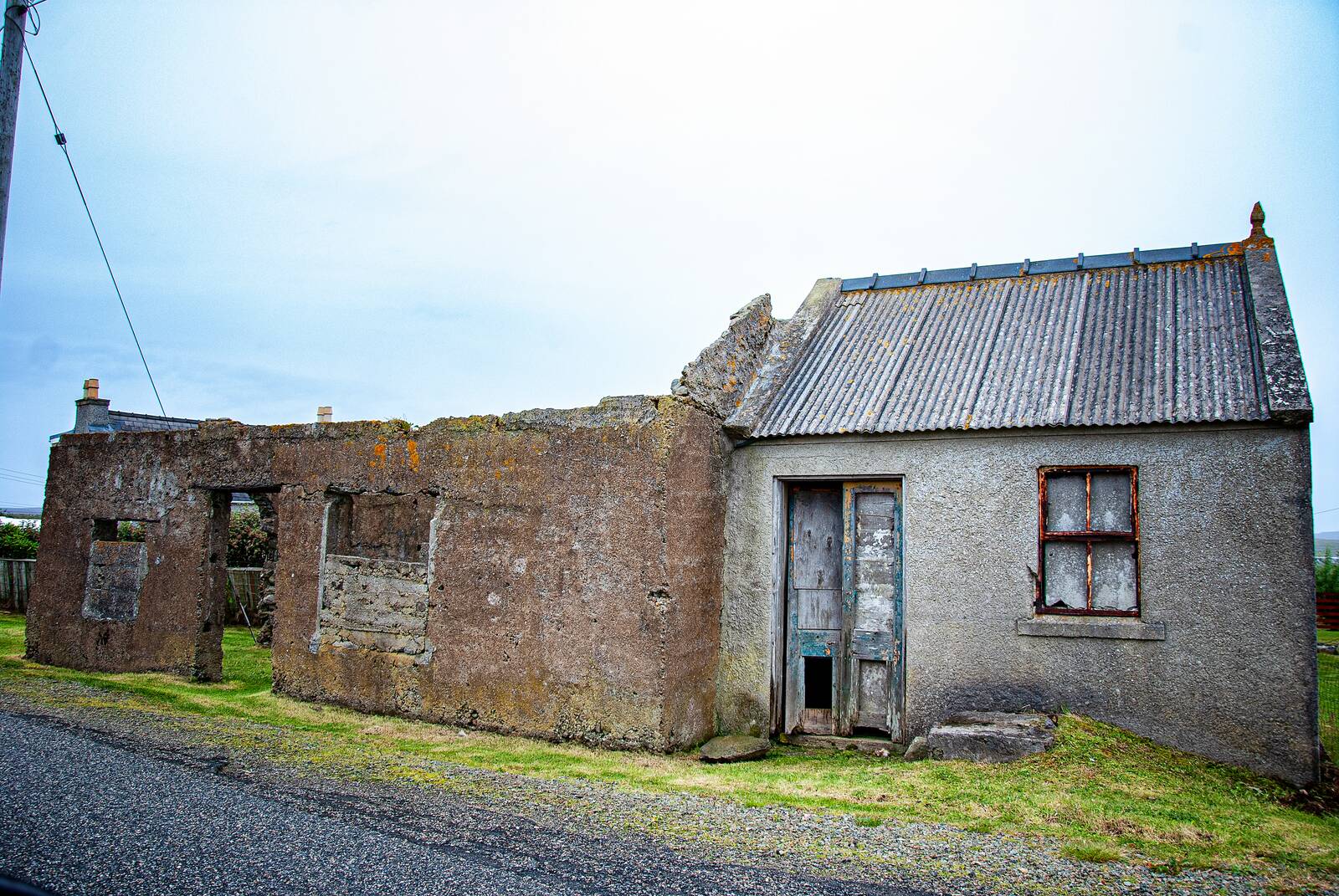 mullach meirgeach · rusted roof
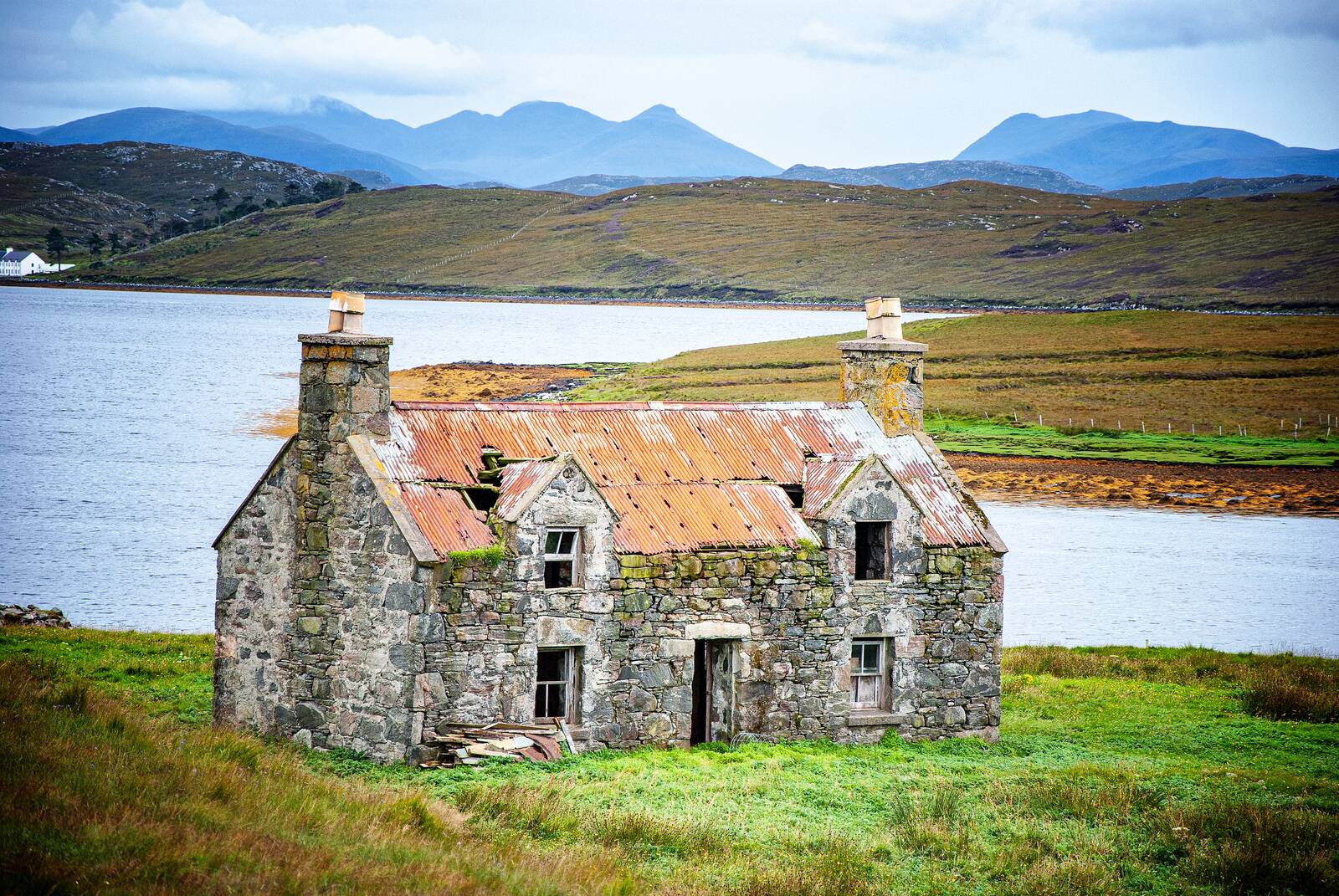 fo mullach dearg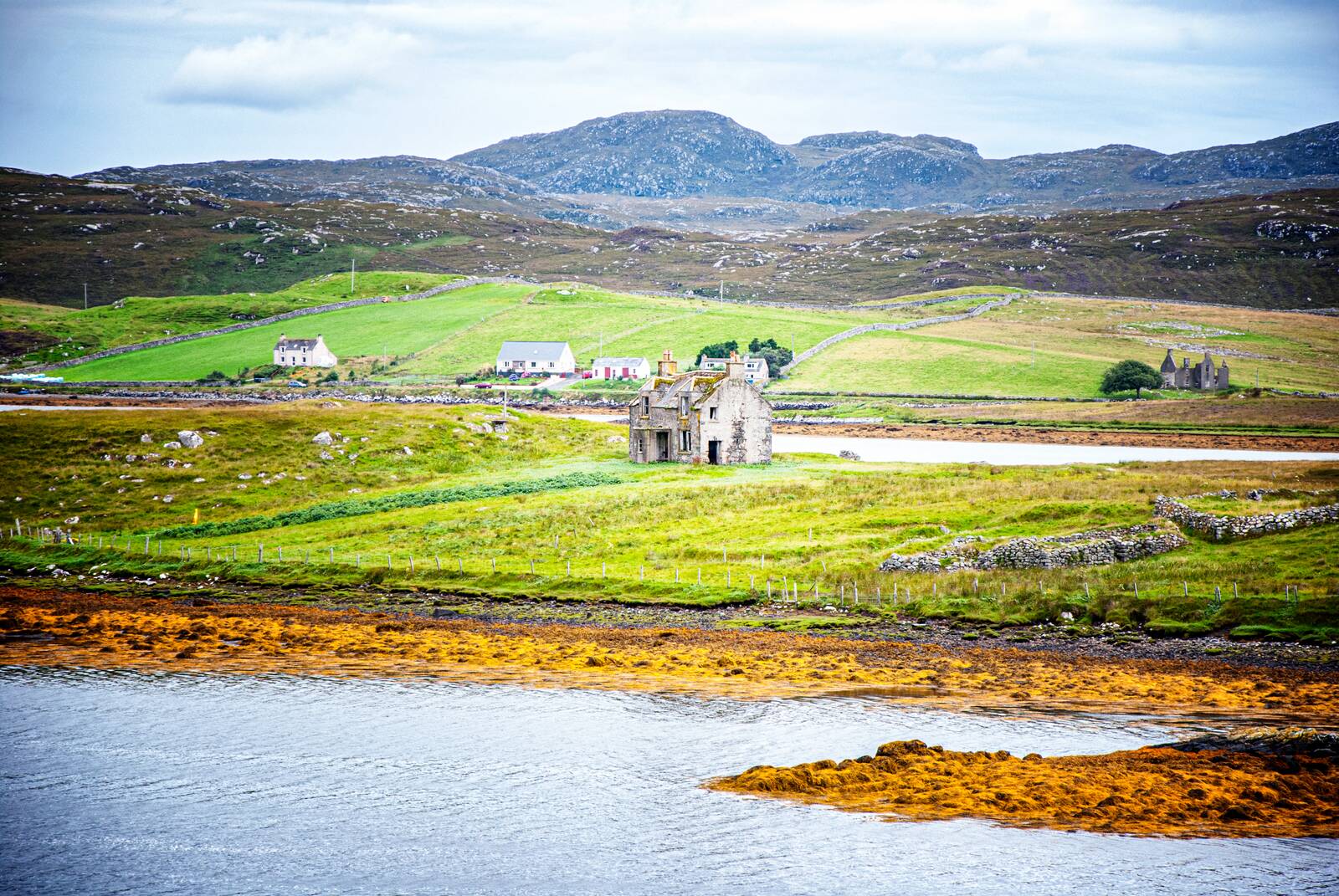
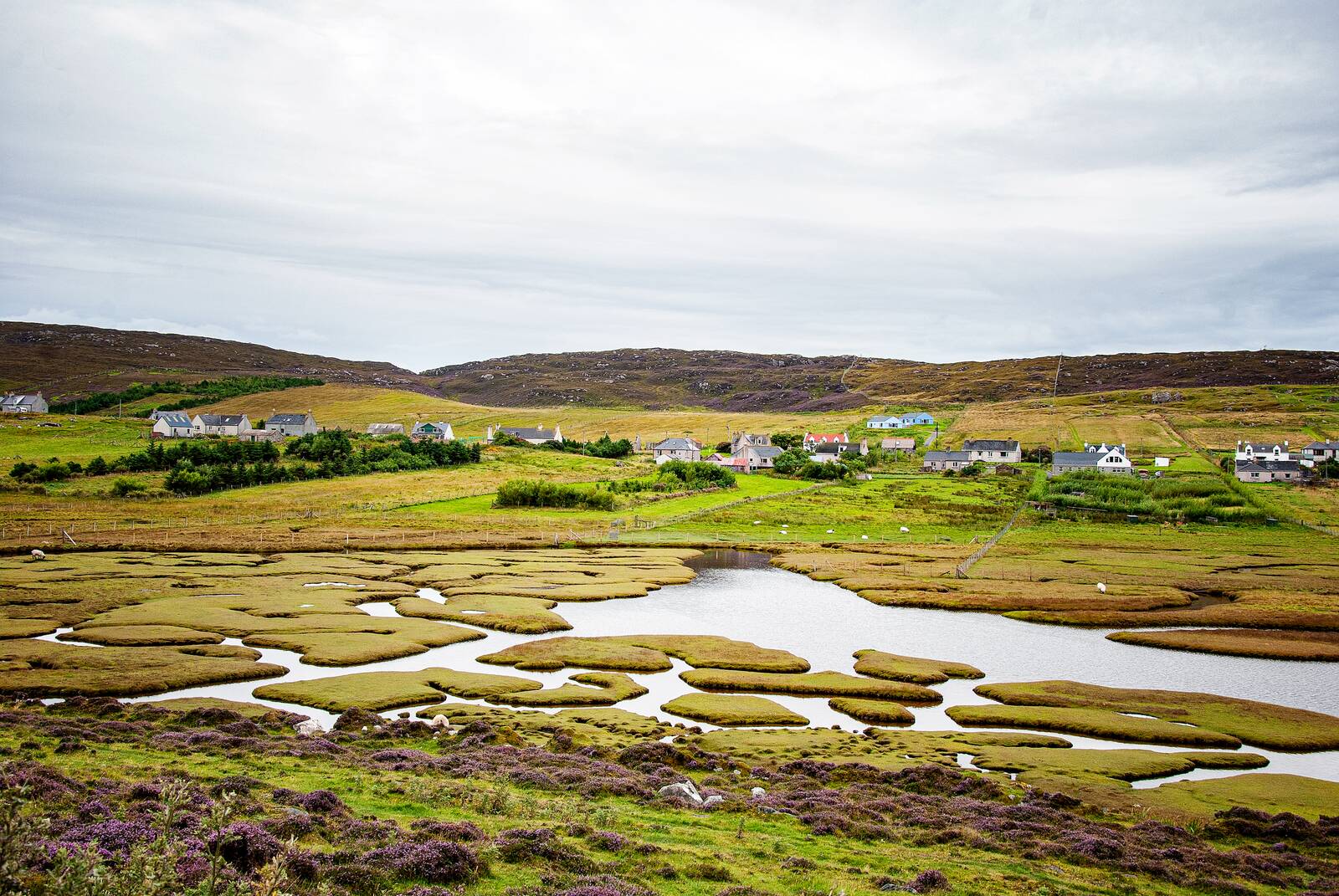
Crofts strung along the water,
each one a long thin argument with the moor.
The moor and its residents
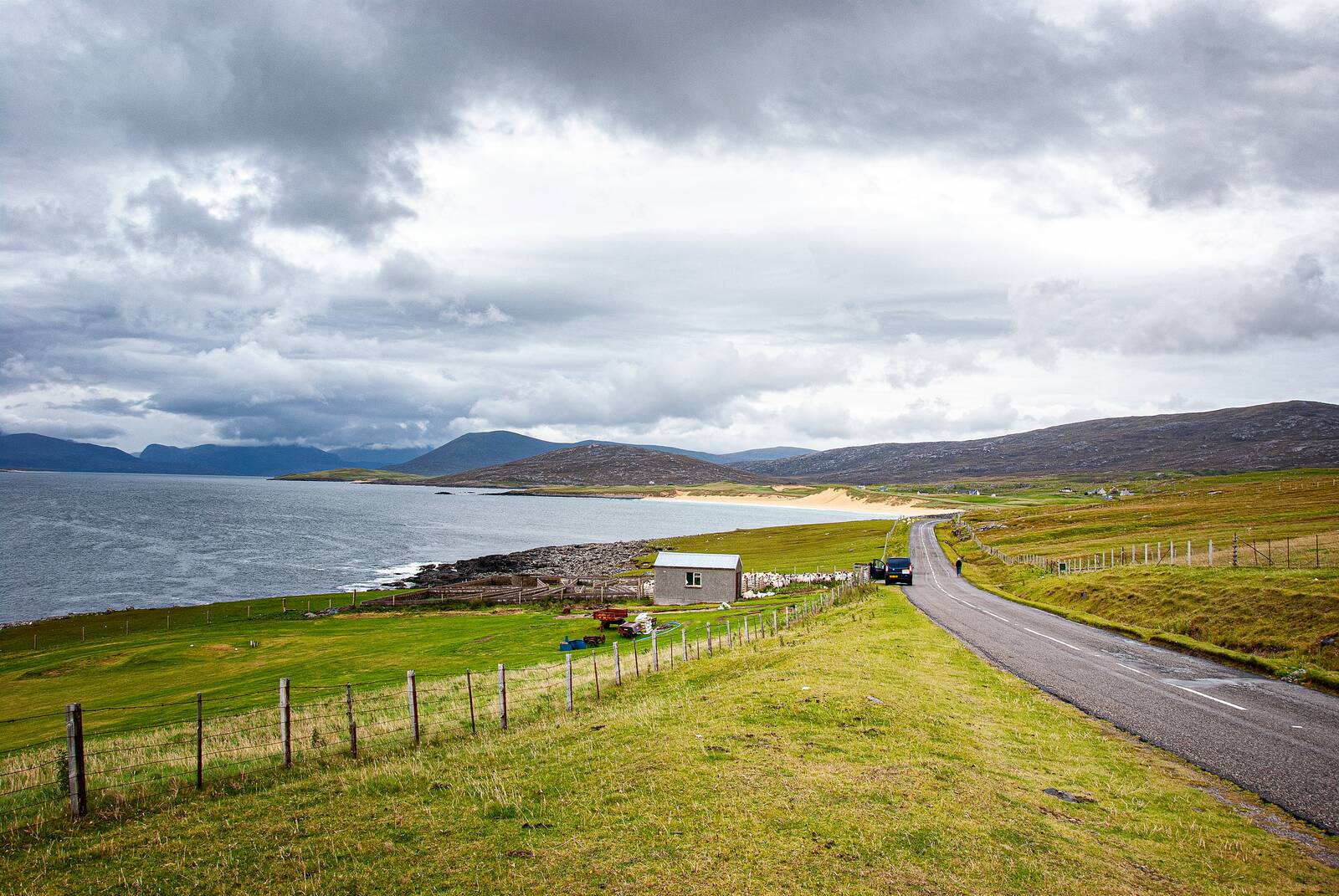
The road runs on ahead,
and the moor pretends not to watch.
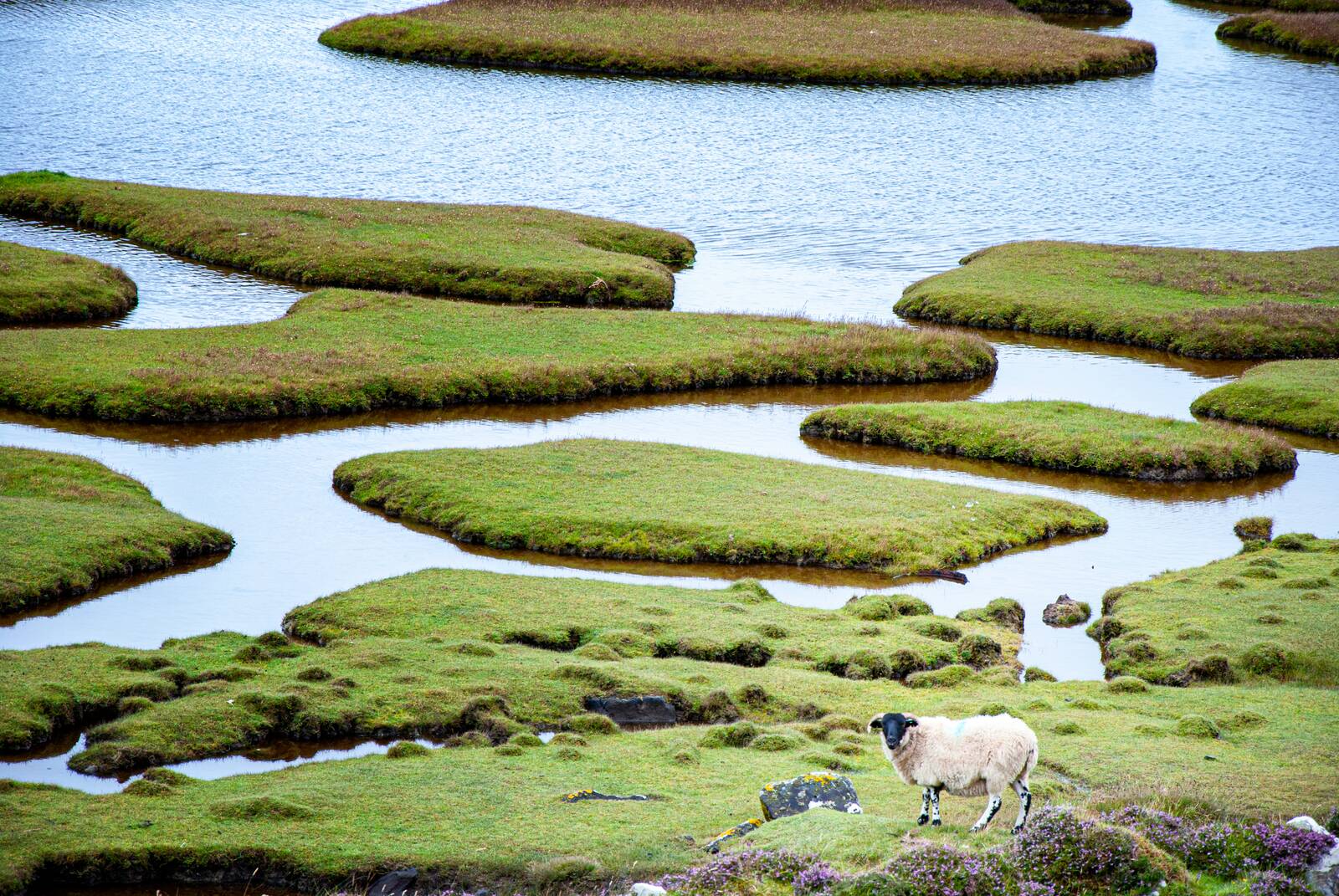
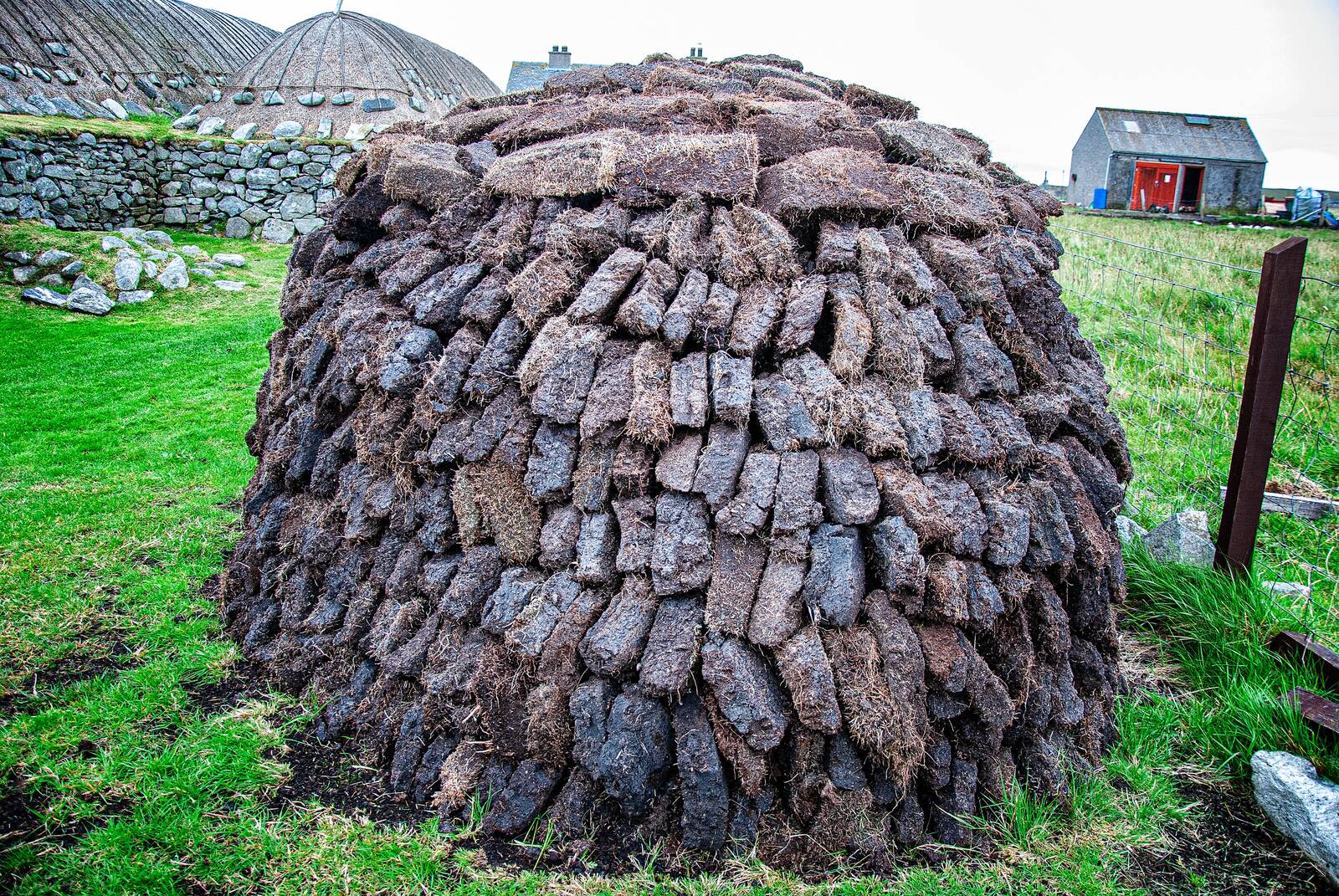
Field plate: the plant that furnished every blackhouse — roof, bed, broom and beer.
Residents: sheep upholstered for the climate, a cow that has decided today is a lying-down day, and the heather doing the soft furnishing.
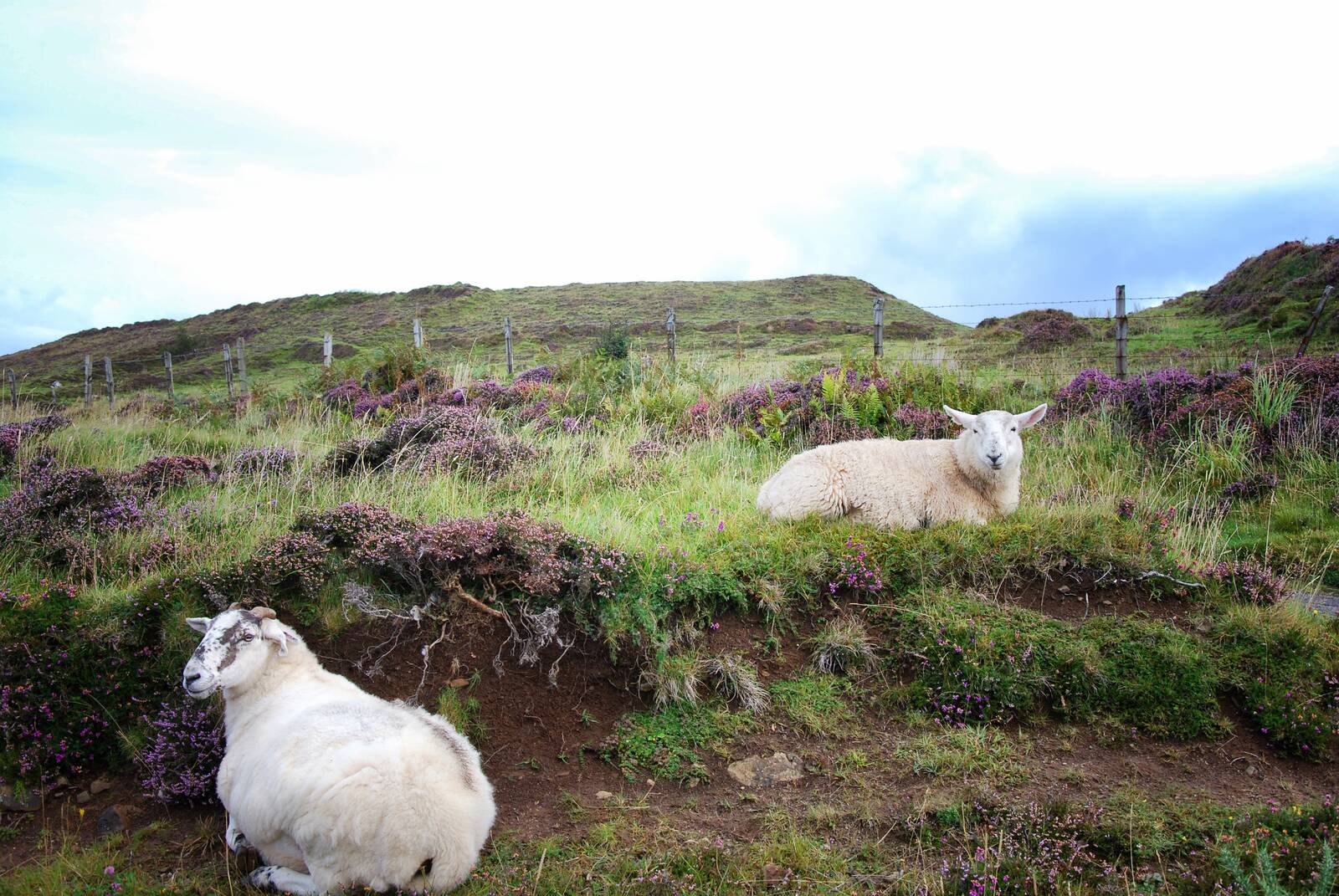 na caoraich · the sheep
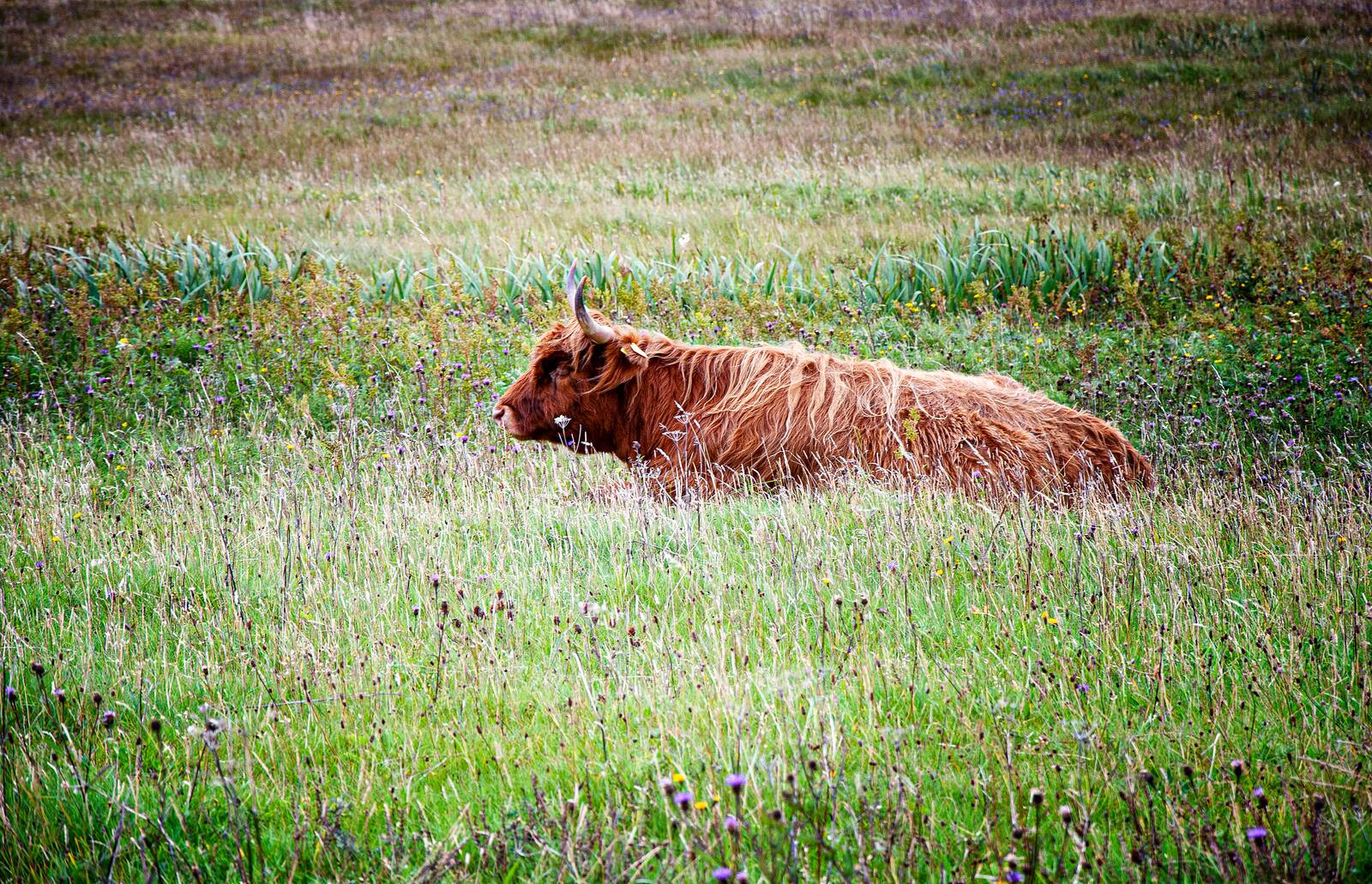 a' bhò na laighe
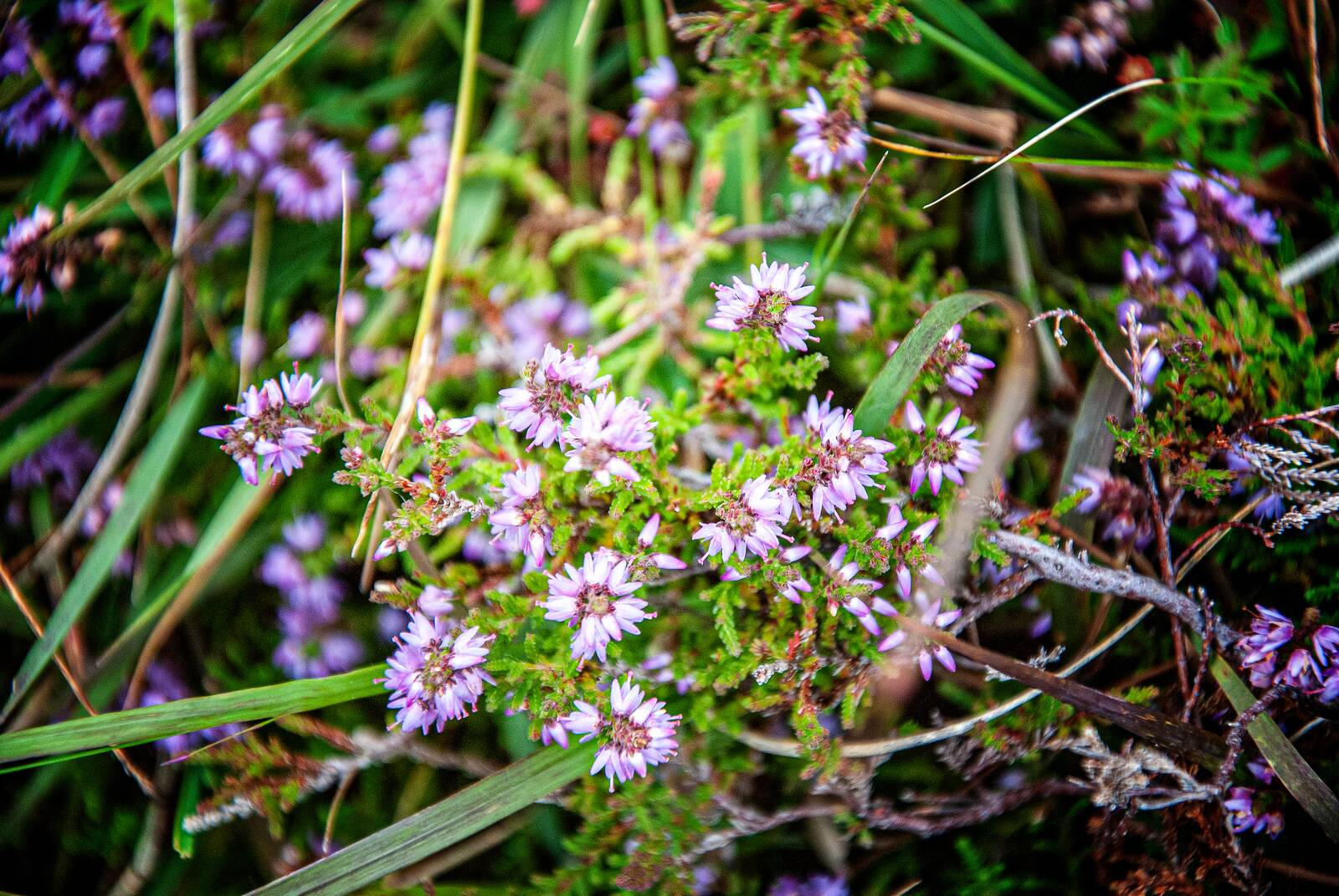 fraoch · heather
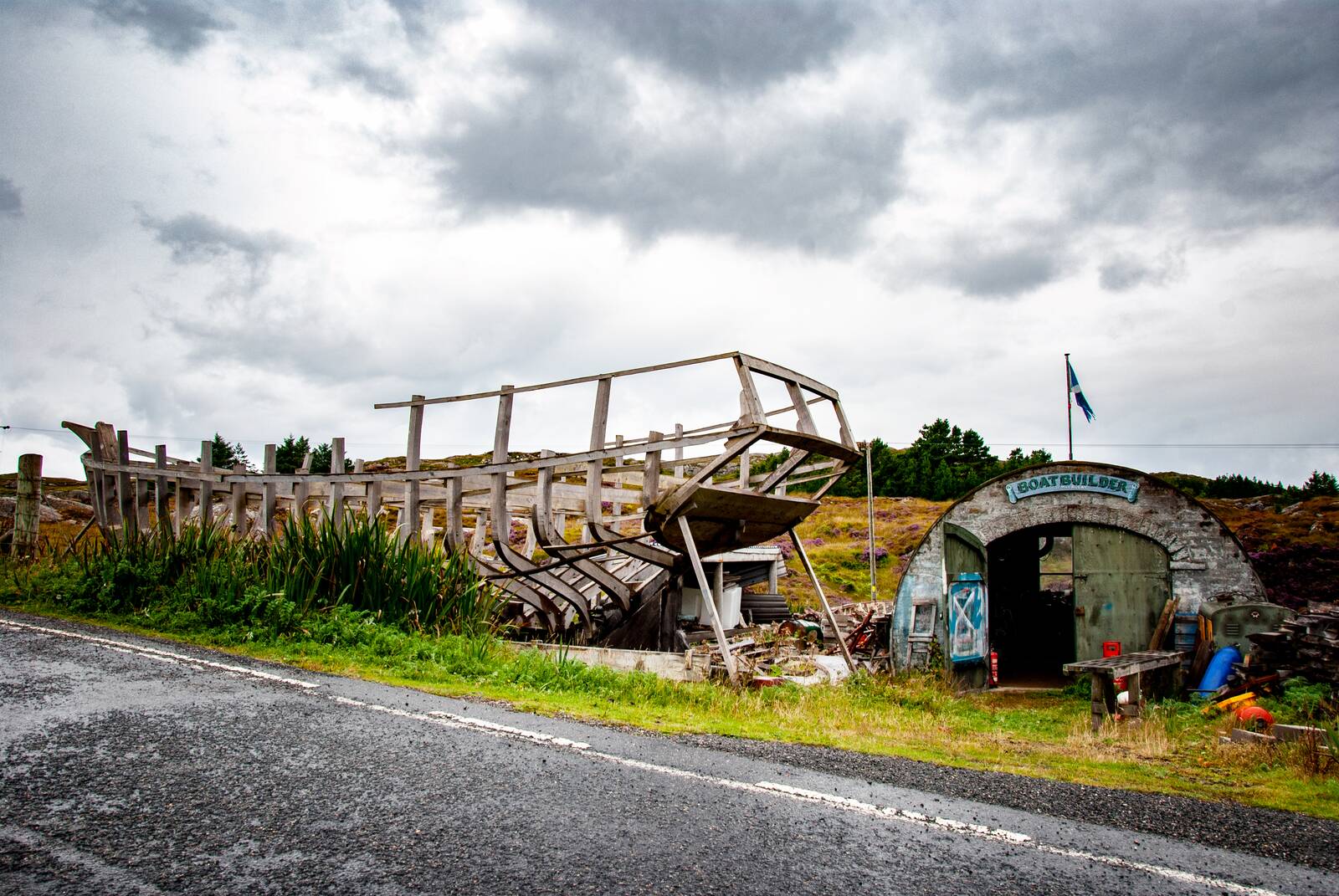
The island retires its vehicles in the open, like statues. The bakery van has been delivering to nobody since the eighties, beautifully.
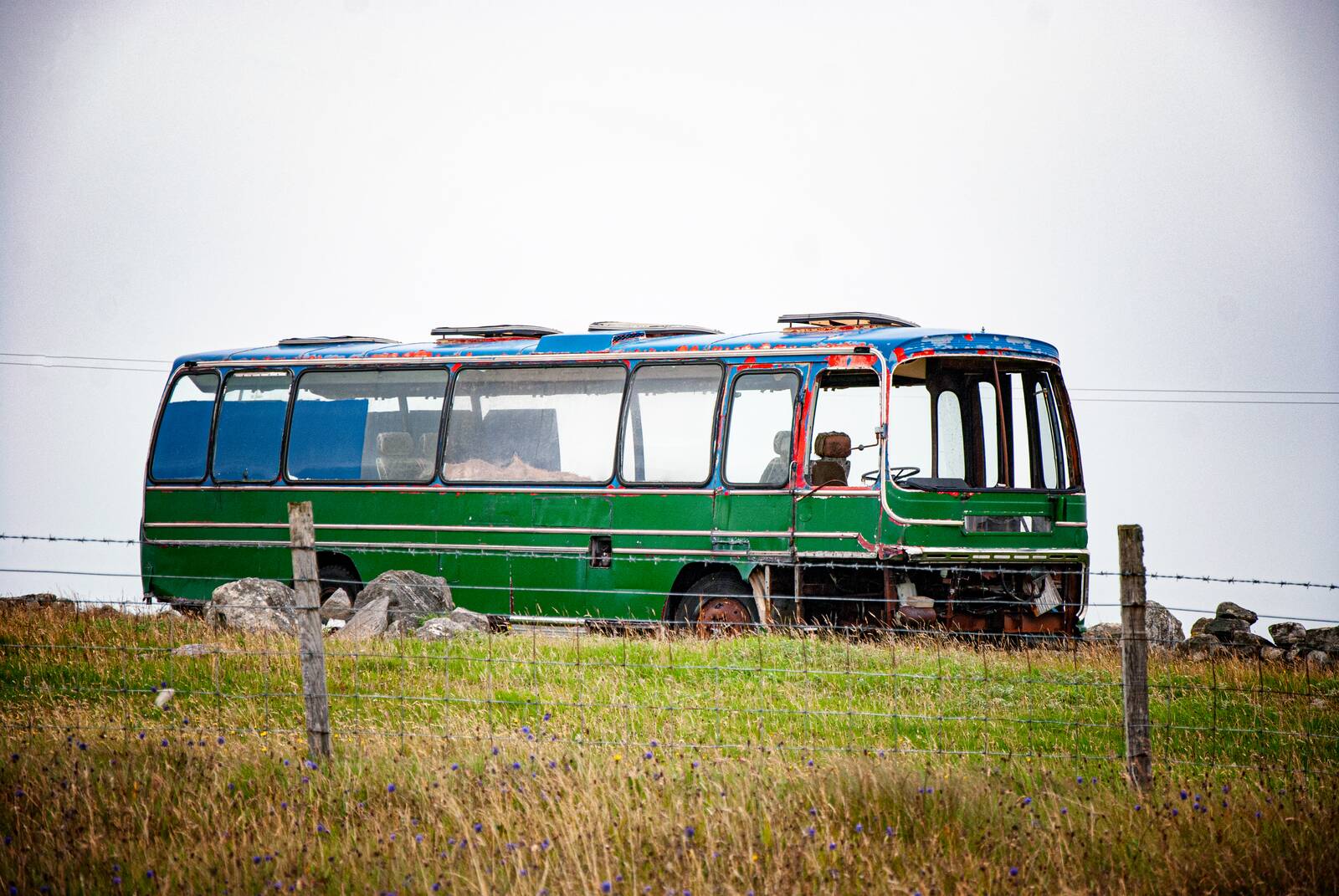 am bus uaine
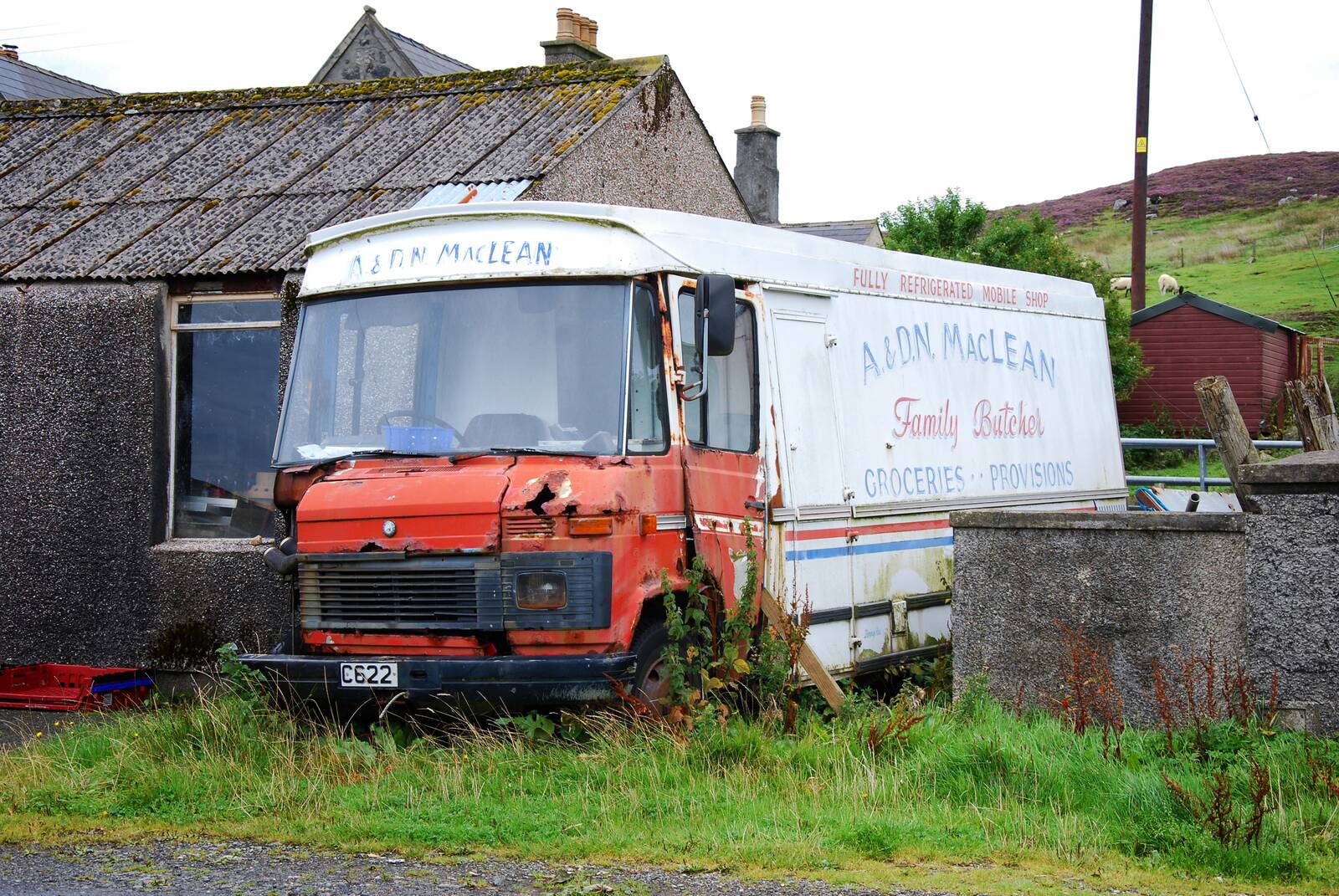 bhan a' bhèiceir
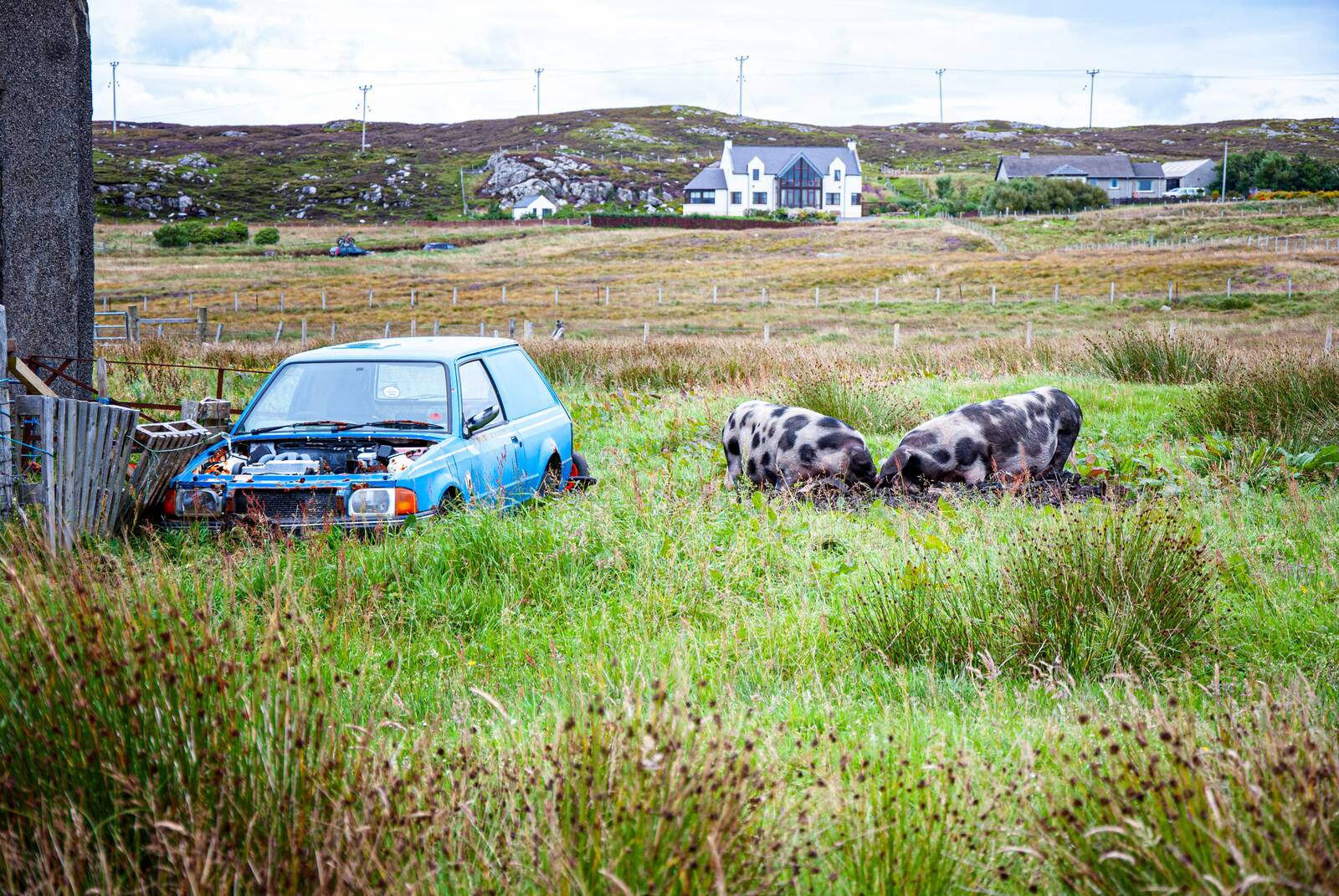 an càr gorm
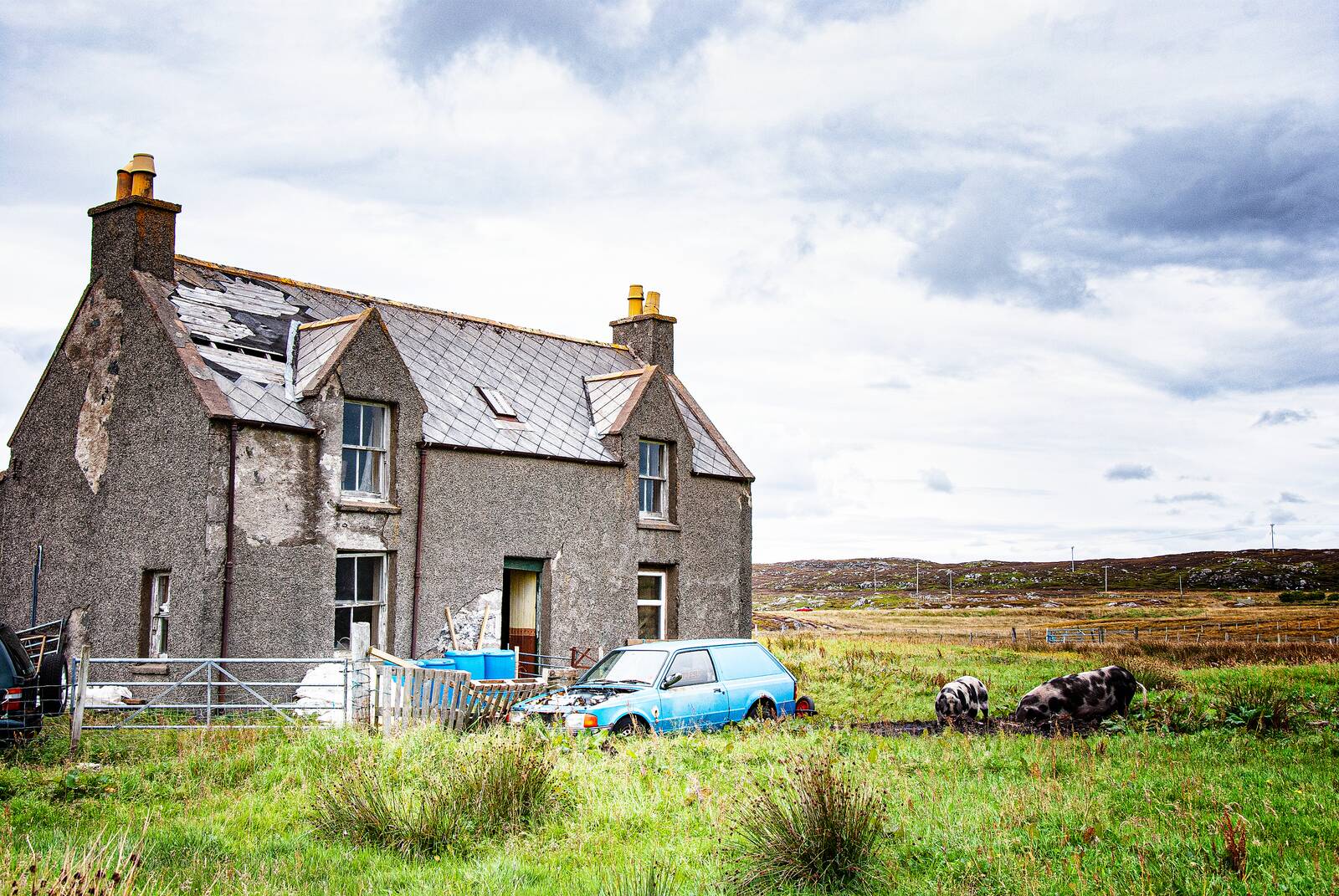 croit is càr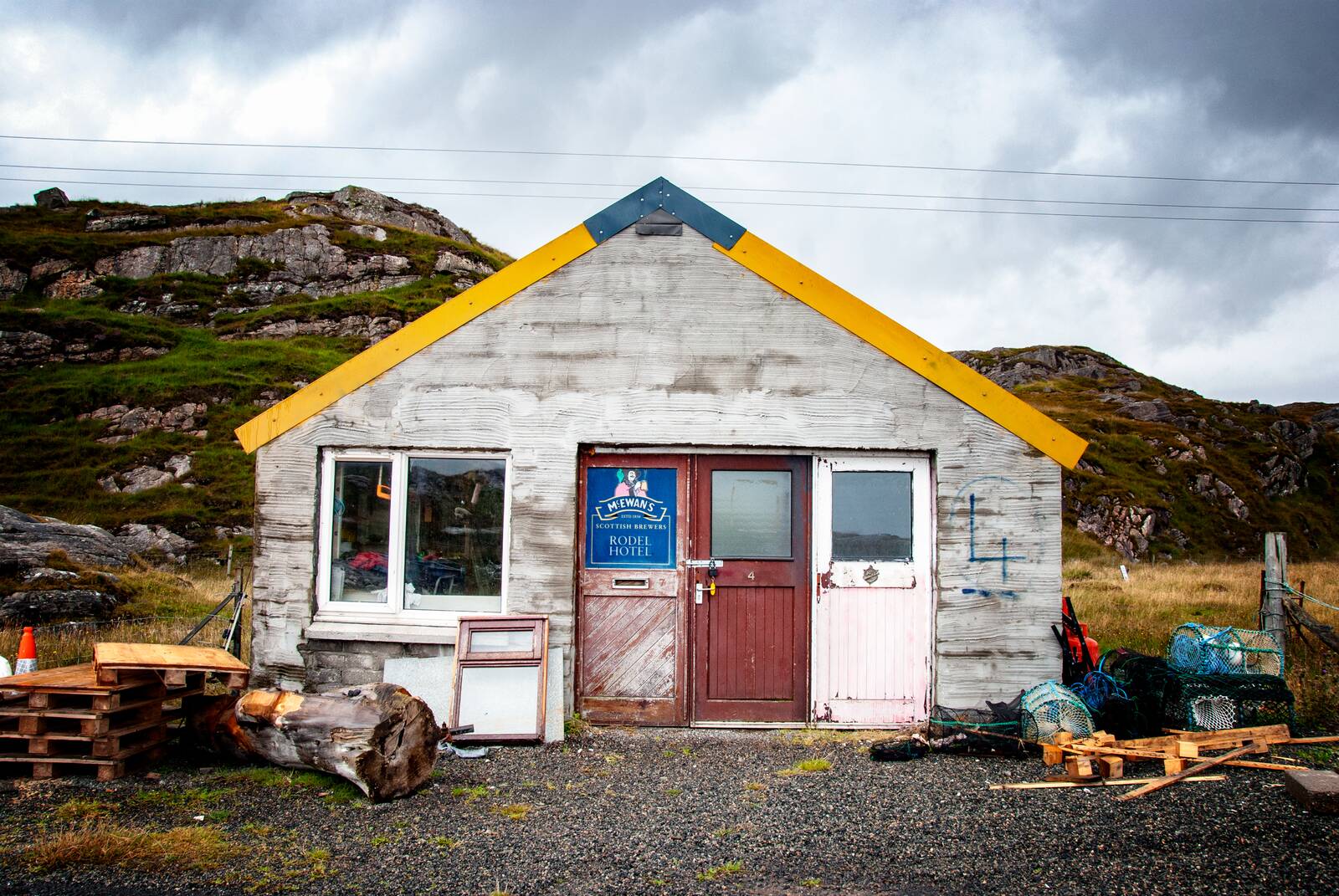
The standing stones
For scale: the tallest monolith in Scotland, at Baile an Truiseil, against one modern human.
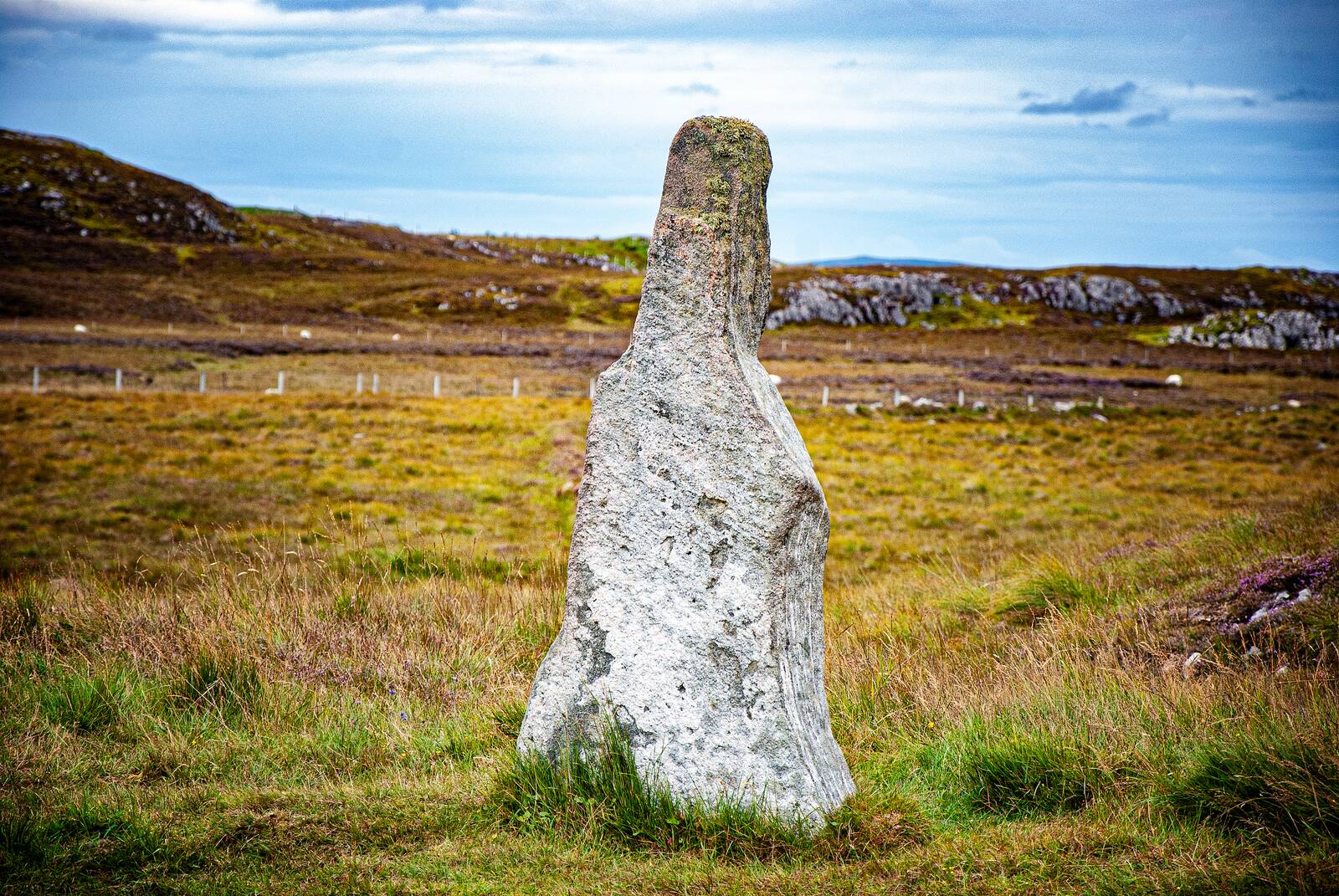
Clach an TruiseilFive point seven five metres of Lewisian gneiss — the oldest rock in Britain, stood on end by people whose names are five thousand years gone.
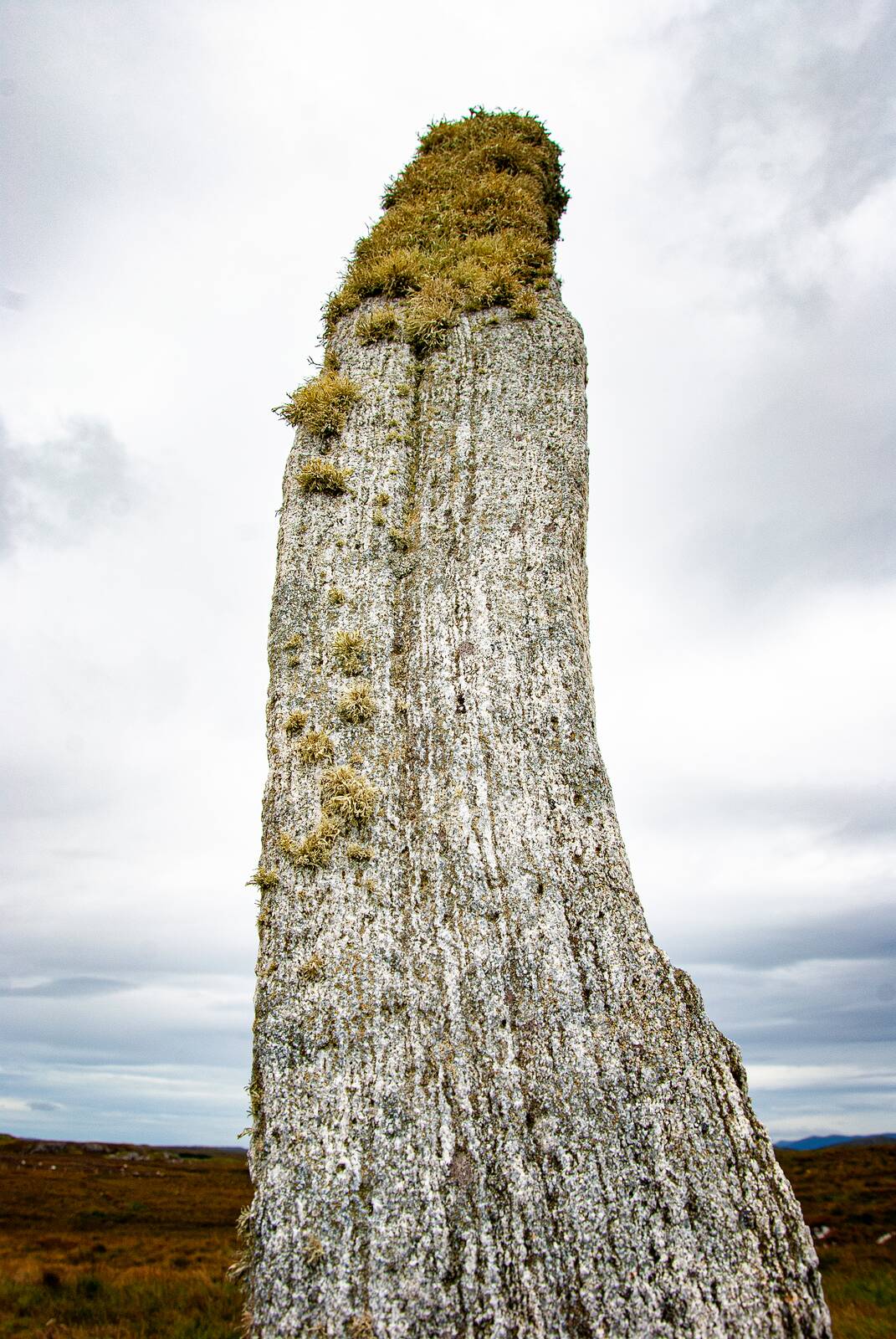
A' chlachGrass grows on his head like a thought.
Field notes from stone country: a holed slab in the grass, heathered rock at the sea's edge, and one lonely shieling on the moor.
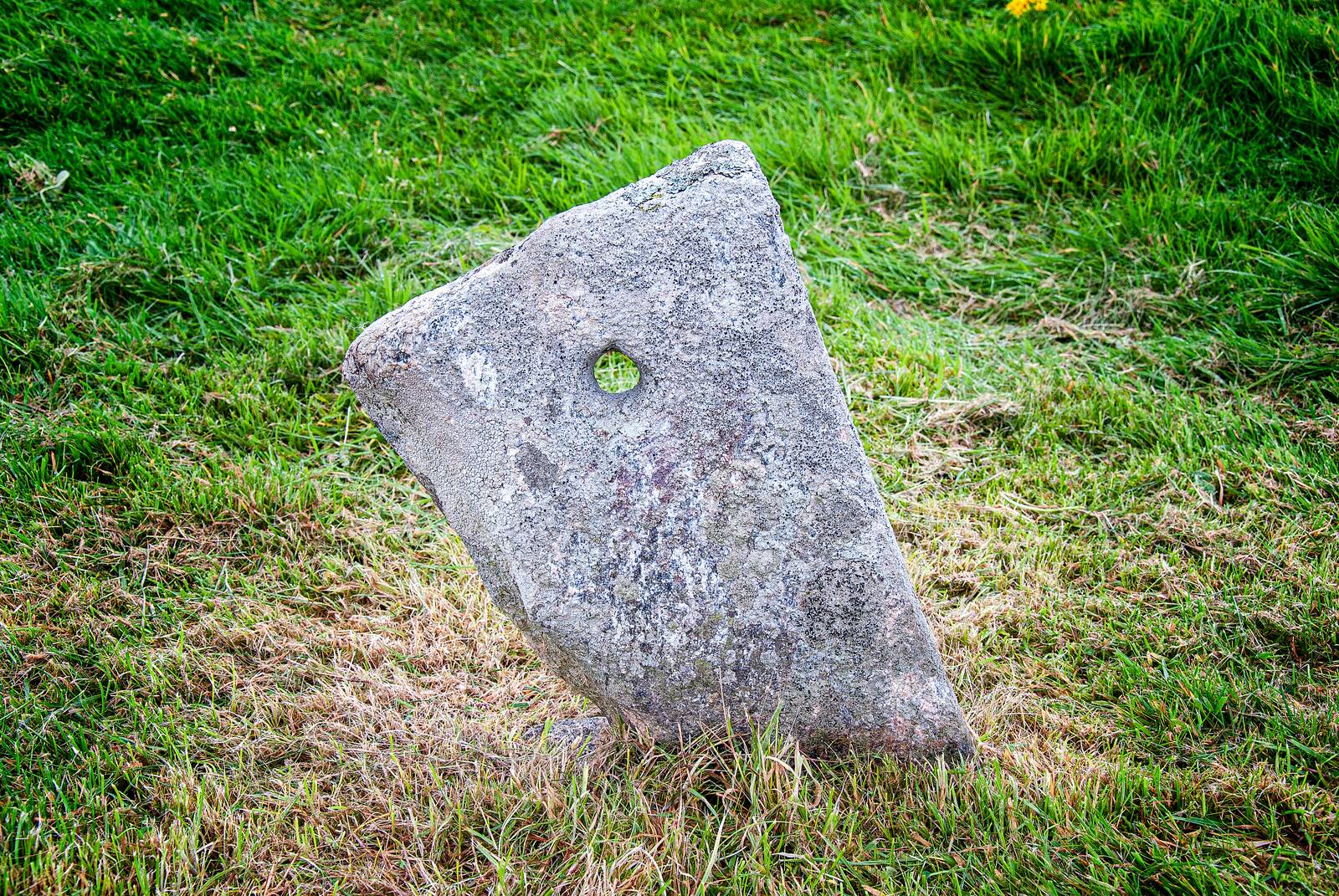 clach tuill · the holed stone
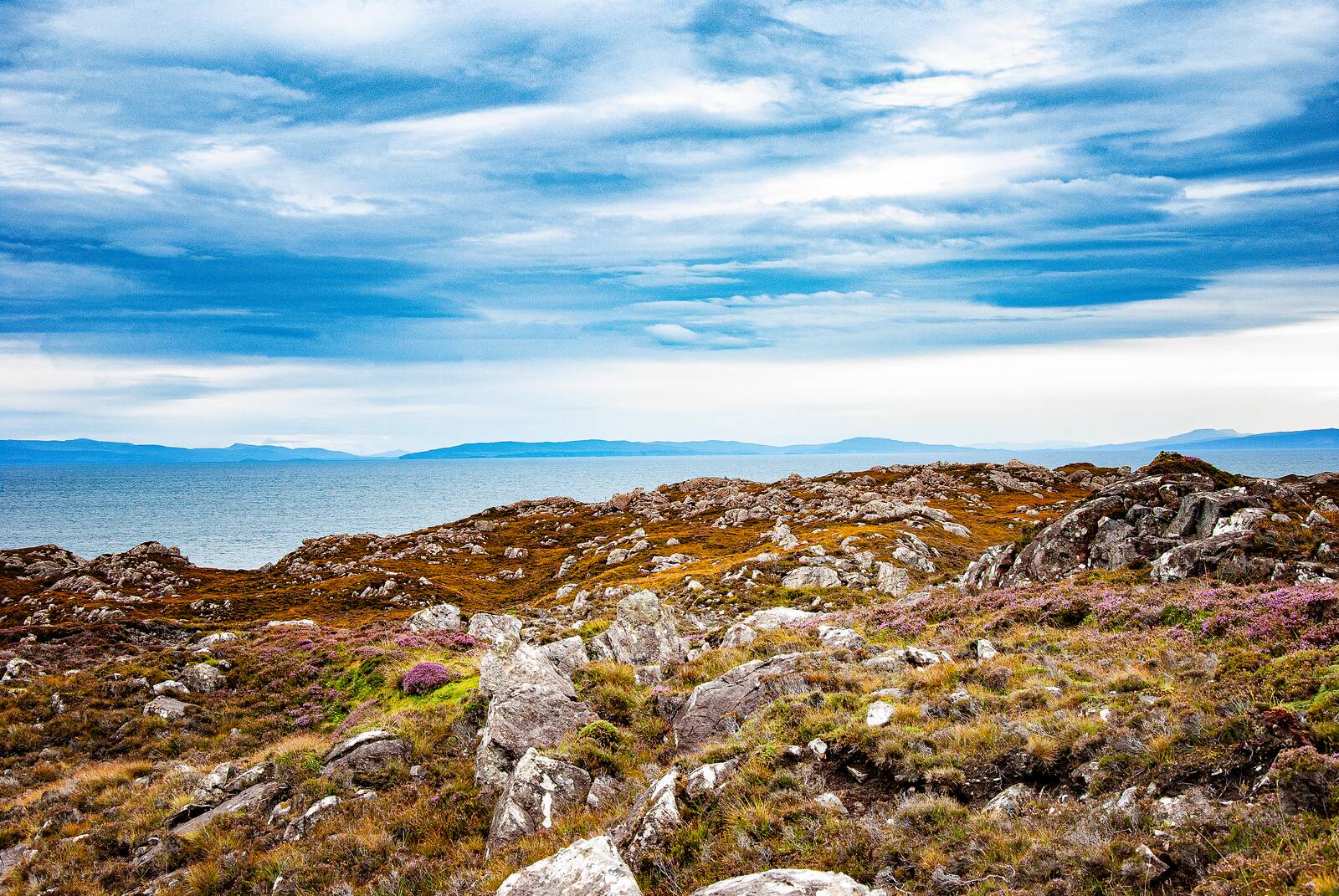 an cladach · the shore
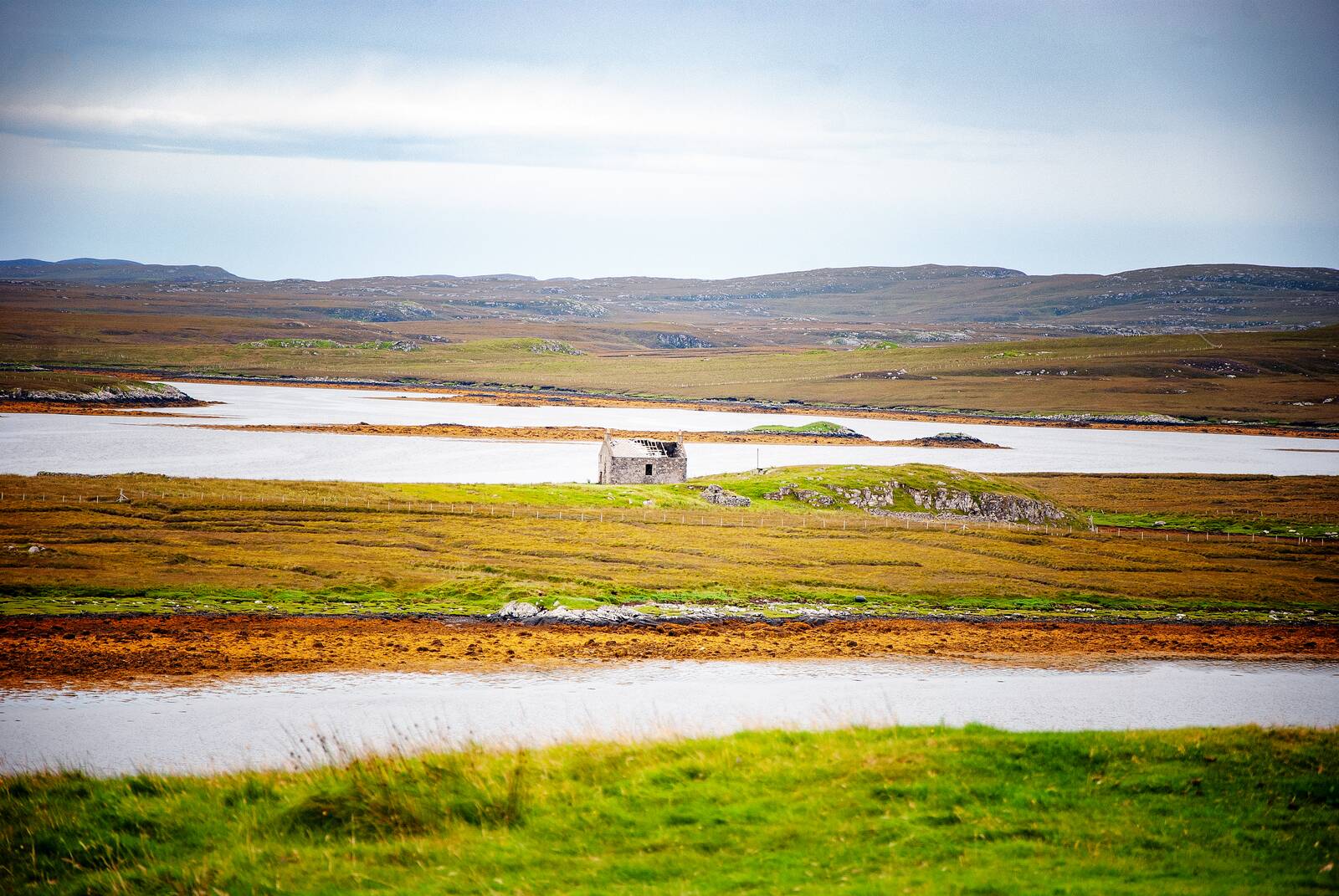 àirigh · the shieling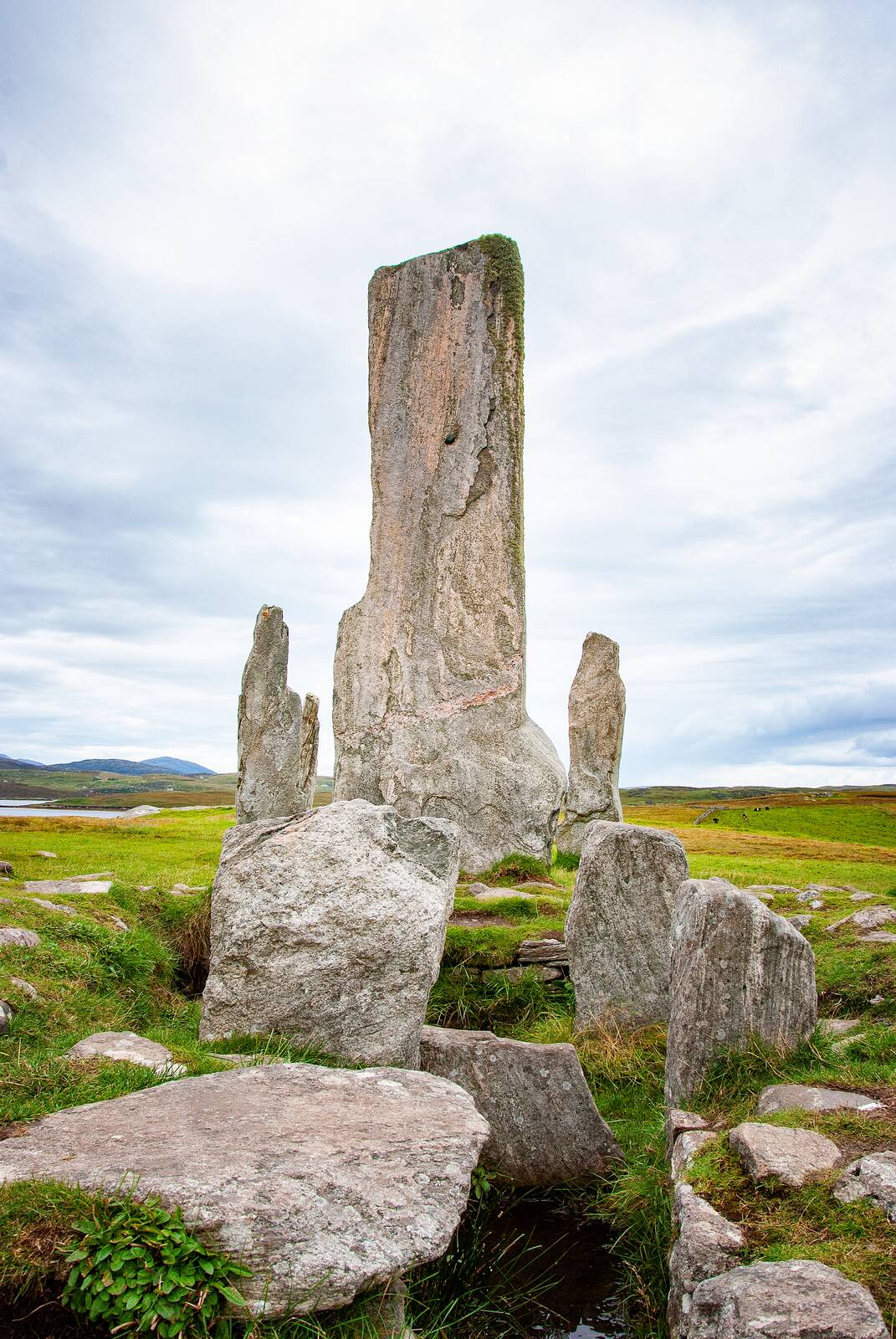
Na clachan beagaA satellite group among fallen boulders — outriders posted on the ridge, keeping the great circle in sight.
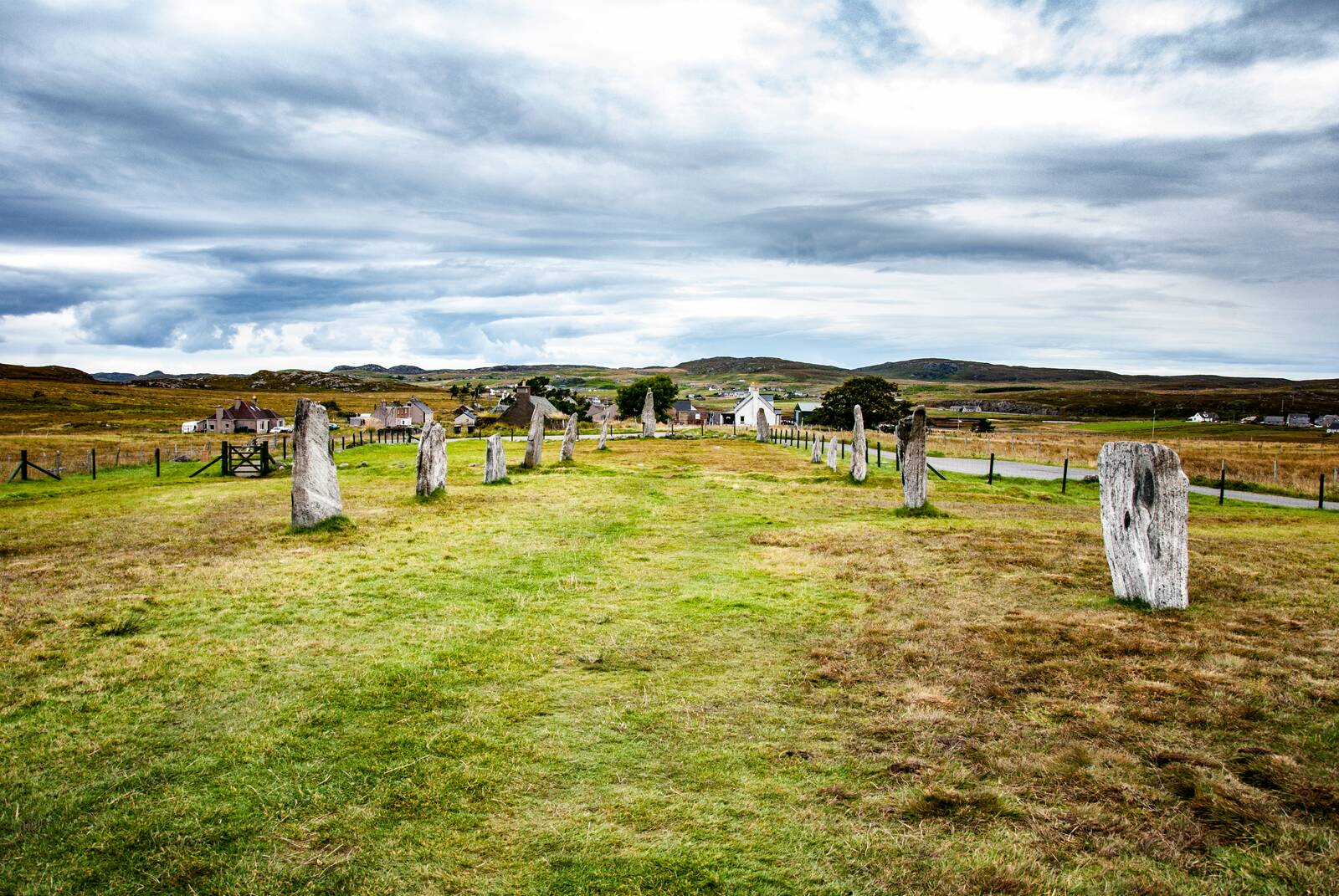
Plan of the great cross of Calanais, paced out on site. The avenue points a few degrees east of true north; every nineteen years the moon walks the horizon it frames.
ciad shealladh —
first sight
An t-sligheDown the avenue toward the circle — the processional way, still processing after forty-nine centuries. Whatever it was for, it still works.
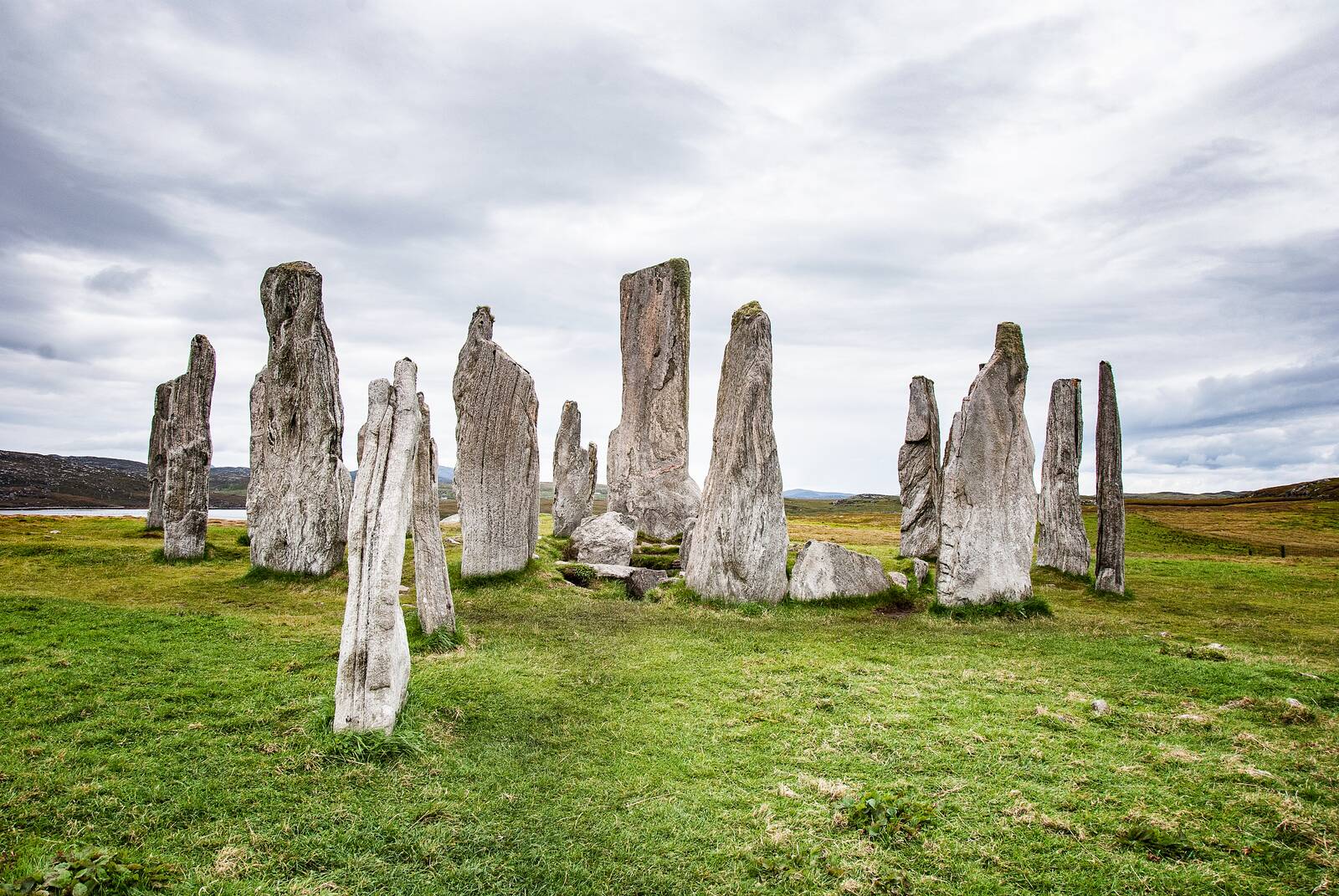
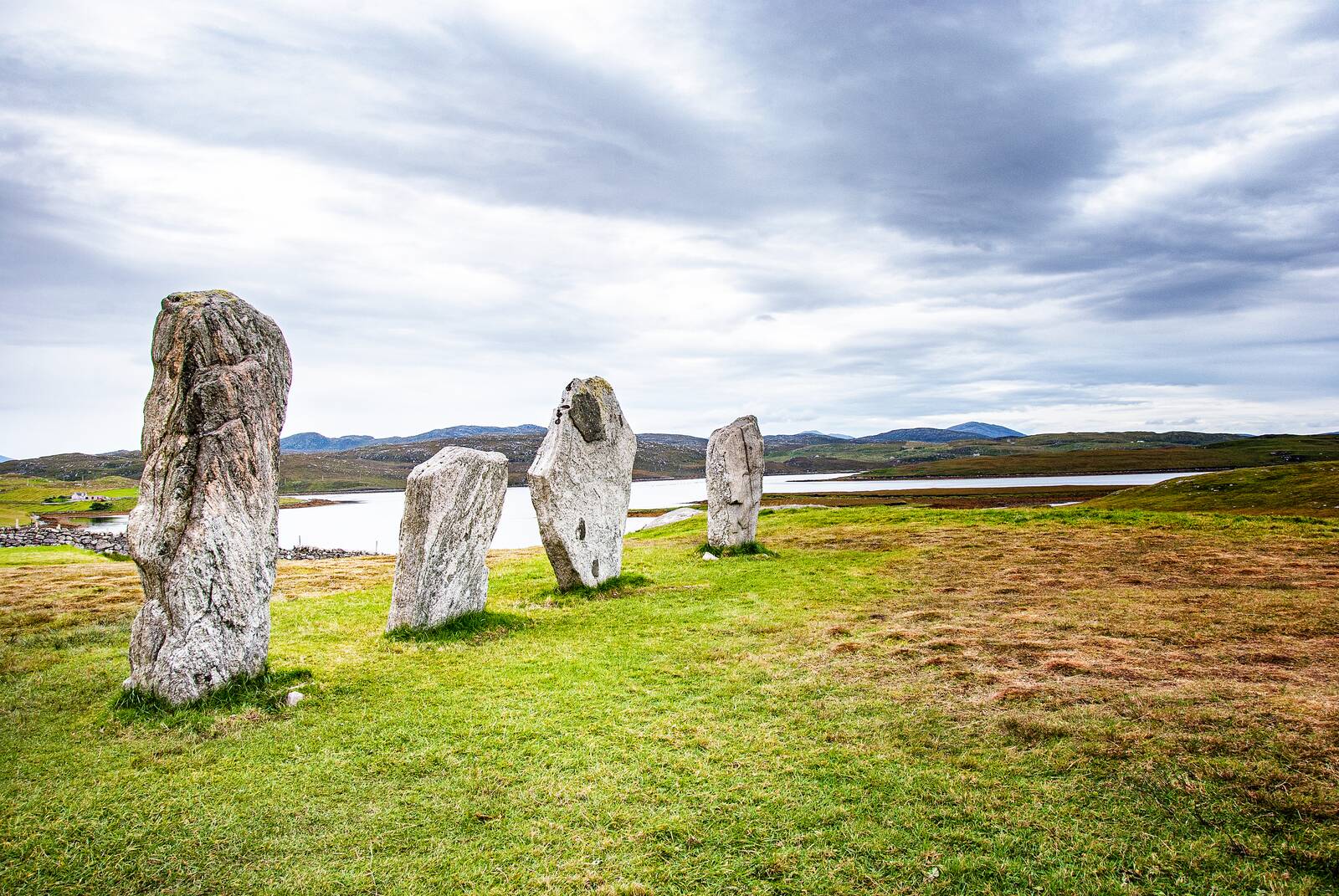
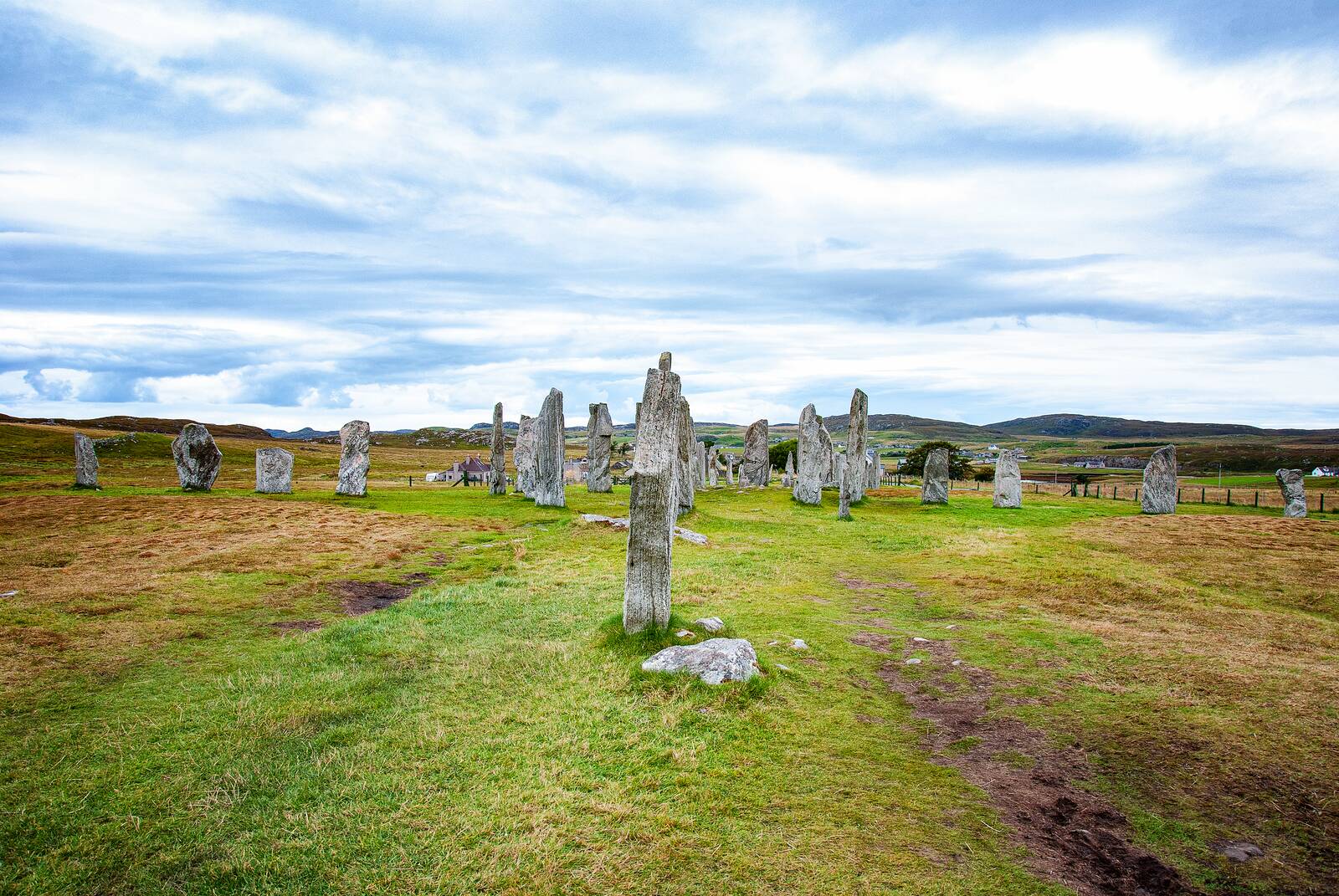
The circle from inside and out — thirteen stones and a central monolith over a burial that came later. The gneiss is three billion years old; the arrangement, a youthful five thousand.
 cridhe an tursachain
 na fir chlis
 an cearcall · the circle
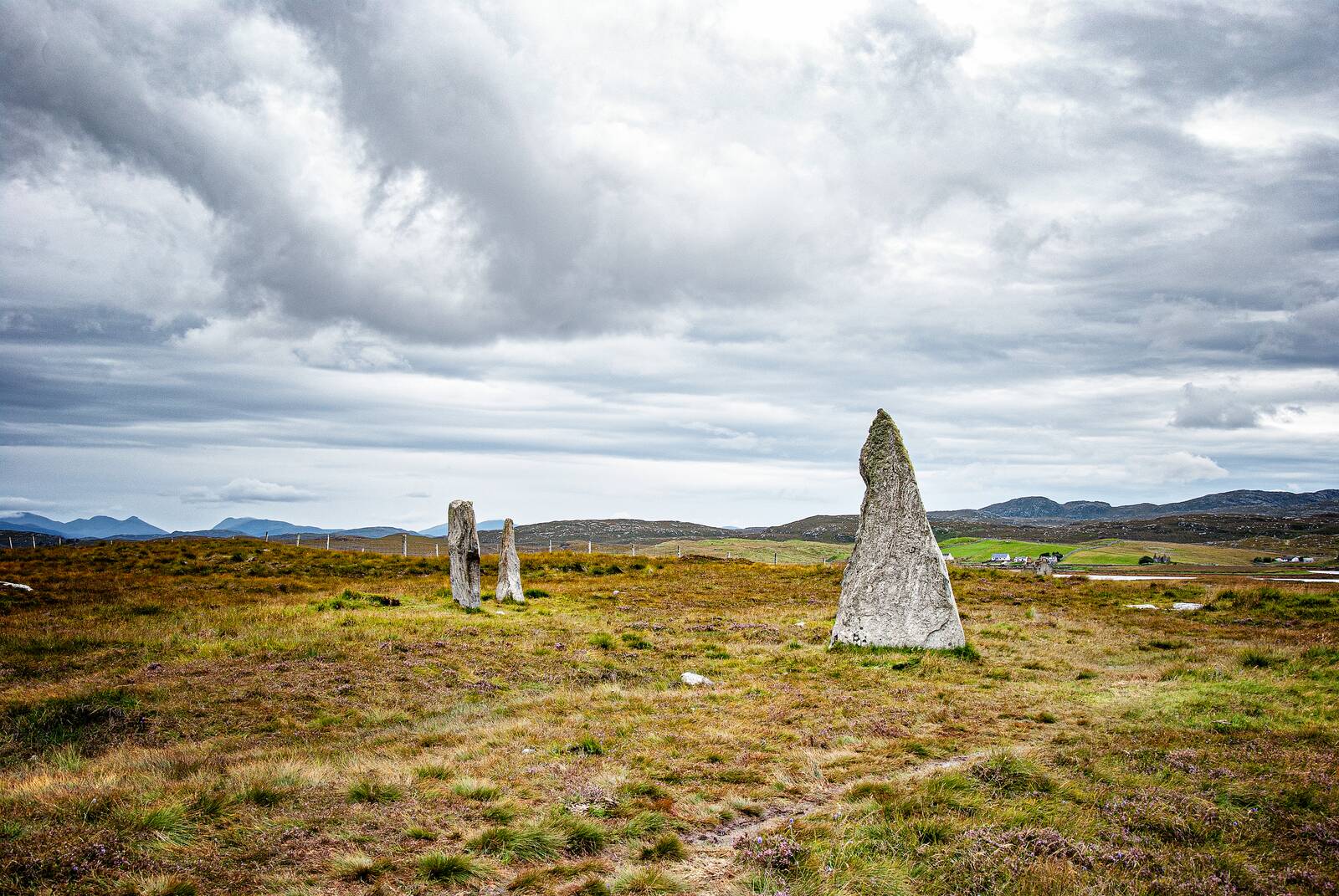 na satailitean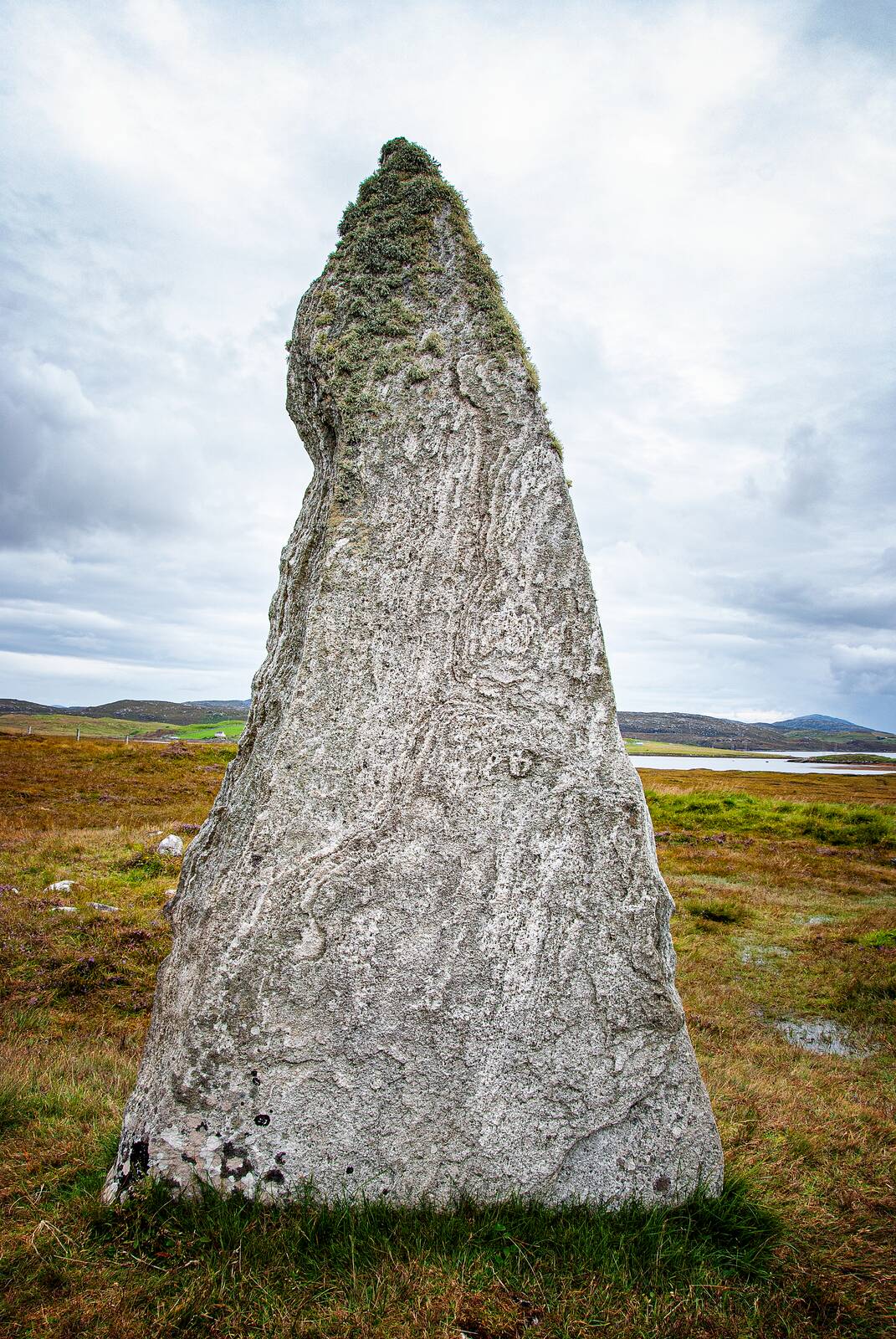
An fhreiceadanThe last stone I photographed, up close: lichen-mapped, rain-polished, unimpressed by cameras.
The ferry home
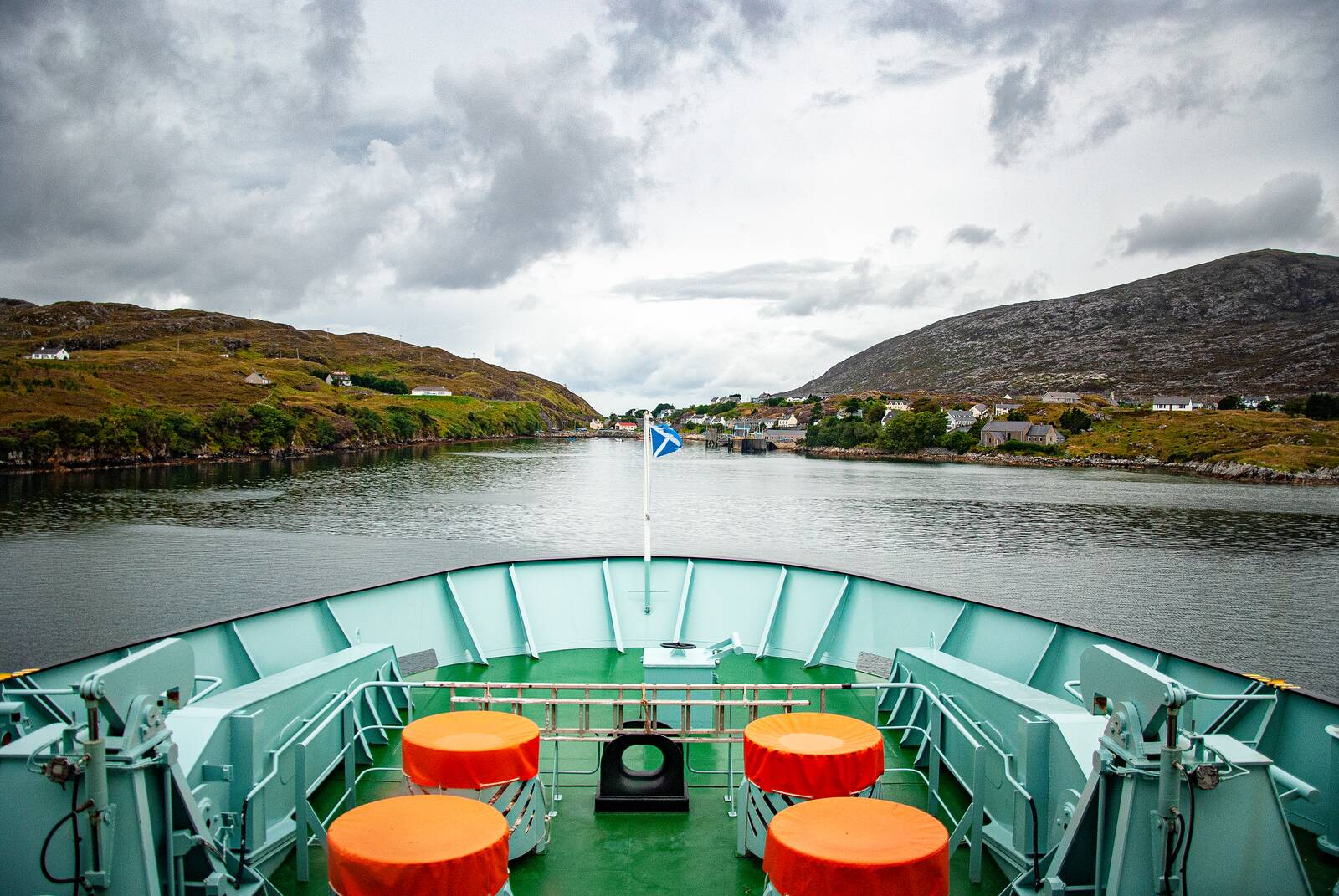
The bow points east,
and the islands fold back into the weather.
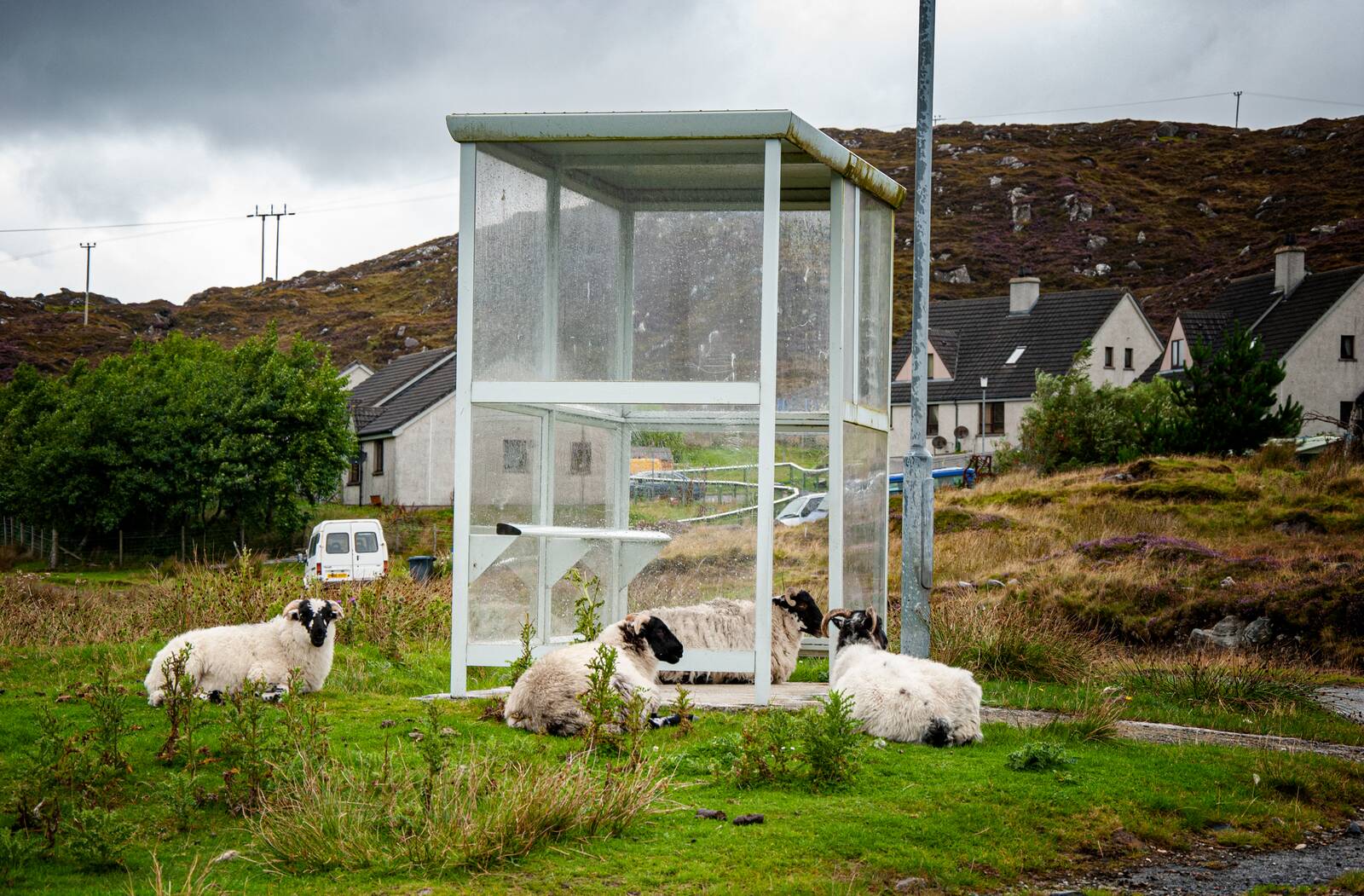
Am fasgadhAnd at the road-end, the definitive image of Hebridean pragmatism: a bus shelter, full of sheep. They were there before the bus; they will be there after the bus. They are, in every sense that matters, the bus.